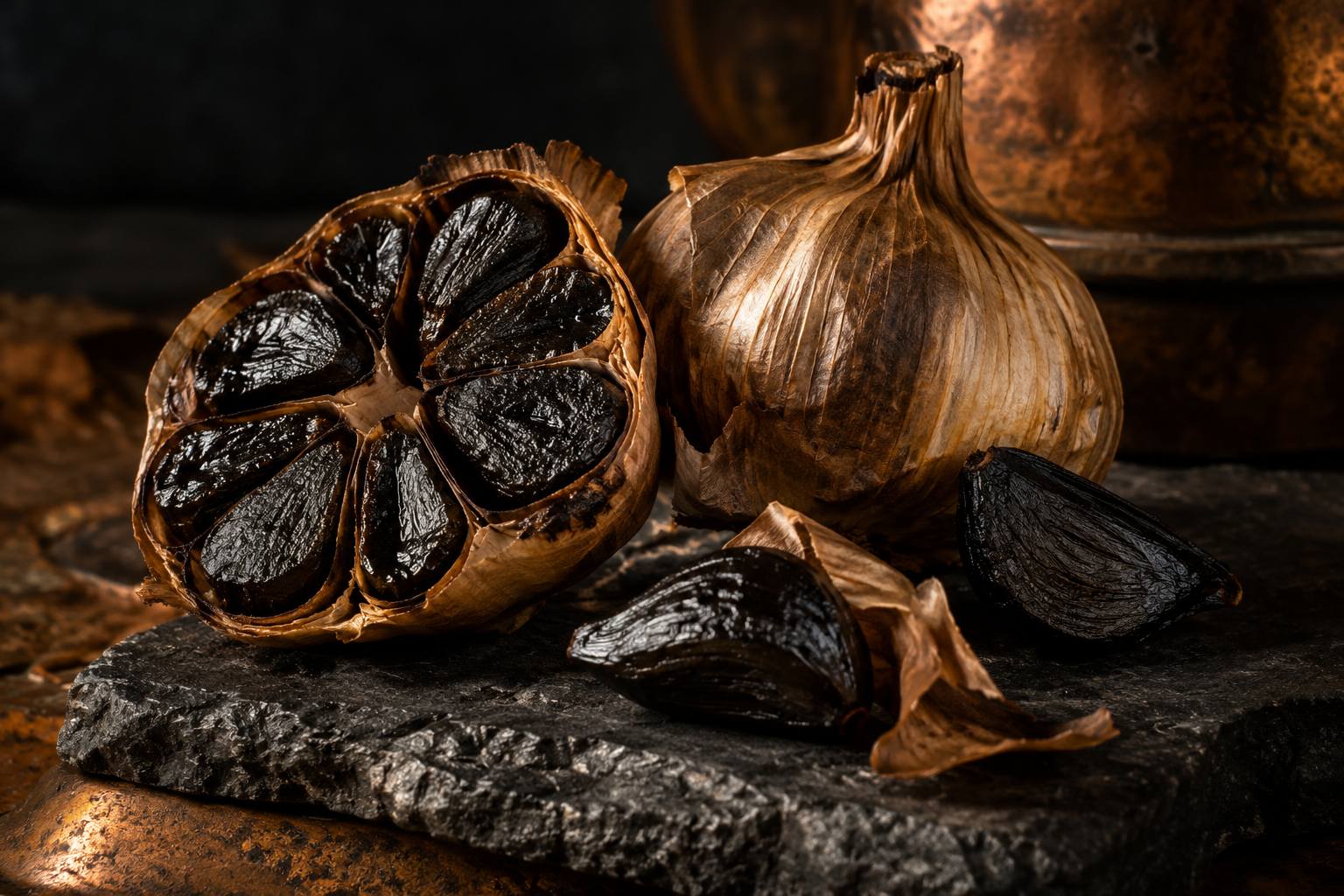
Cut into a head of black garlic and the colour is startling: not violet, not brown, but almost jet black. Yet the real surprise arrives when you taste it. The bite of fresh garlic has softened into something fruity, mellow, sweet, lightly tart and intensely savoury.
It is still Allium sativum, the same species as the cloves in your pantry. The transformation comes from extended exposure to controlled heat and humidity, often for days or weeks. During that time, the chemistry of the bulb changes dramatically. Proteins, sugars and sulfur-containing compounds are rearranged and broken down. Dark pigments develop. New aromas appear. [1–3]
The best comparison is not roasted garlic. Roasted garlic is cooked relatively quickly at high oven heat, often producing caramelized edges. Black garlic develops gradually throughout the clove until it becomes dark and soft nearly all the way through.
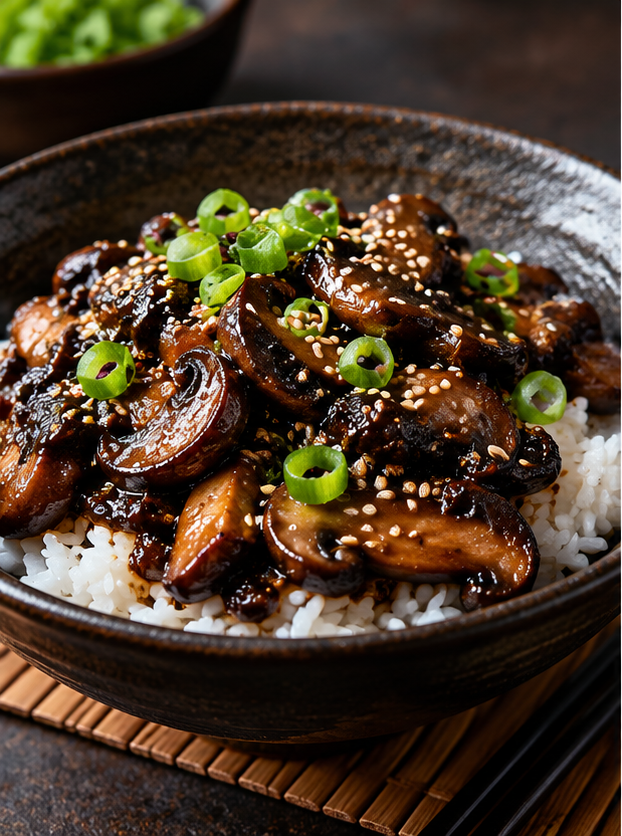
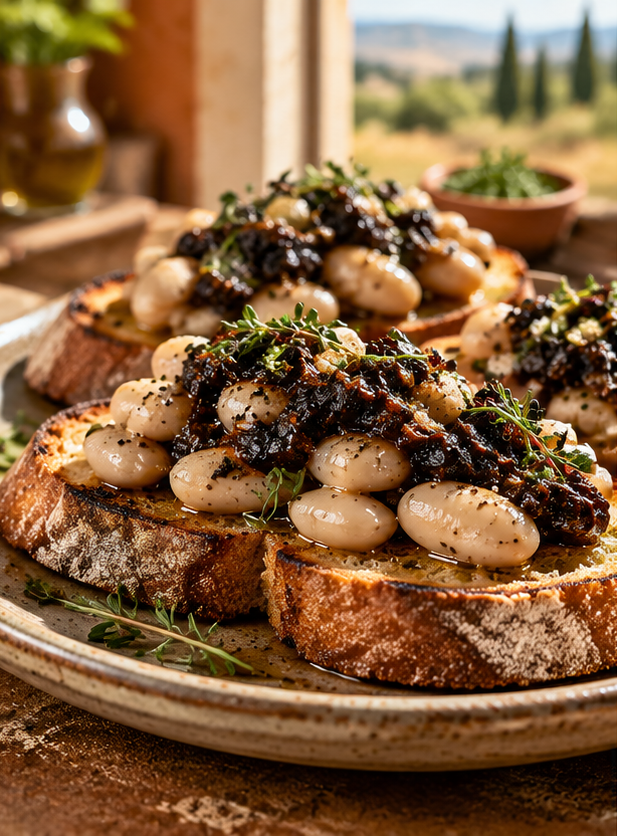
What it tastes like: sweet balsamic, gentle garlic, tamarind, dried plum, umami. What it feels like: sticky and soft, often spreadable. What it can do: add depth to a sauce without the harsh bite of raw garlic.