What the World Is Eating · Issue 3

Buckwheat:
The Seed That Became Three Staples

It is not wheat. It is not even a true cereal grain. Yet Japan turned it into soba, Eastern Europe made it into kasha, and Brittany made it into crisp-edged galettes. Same seed. Three completely different food traditions.

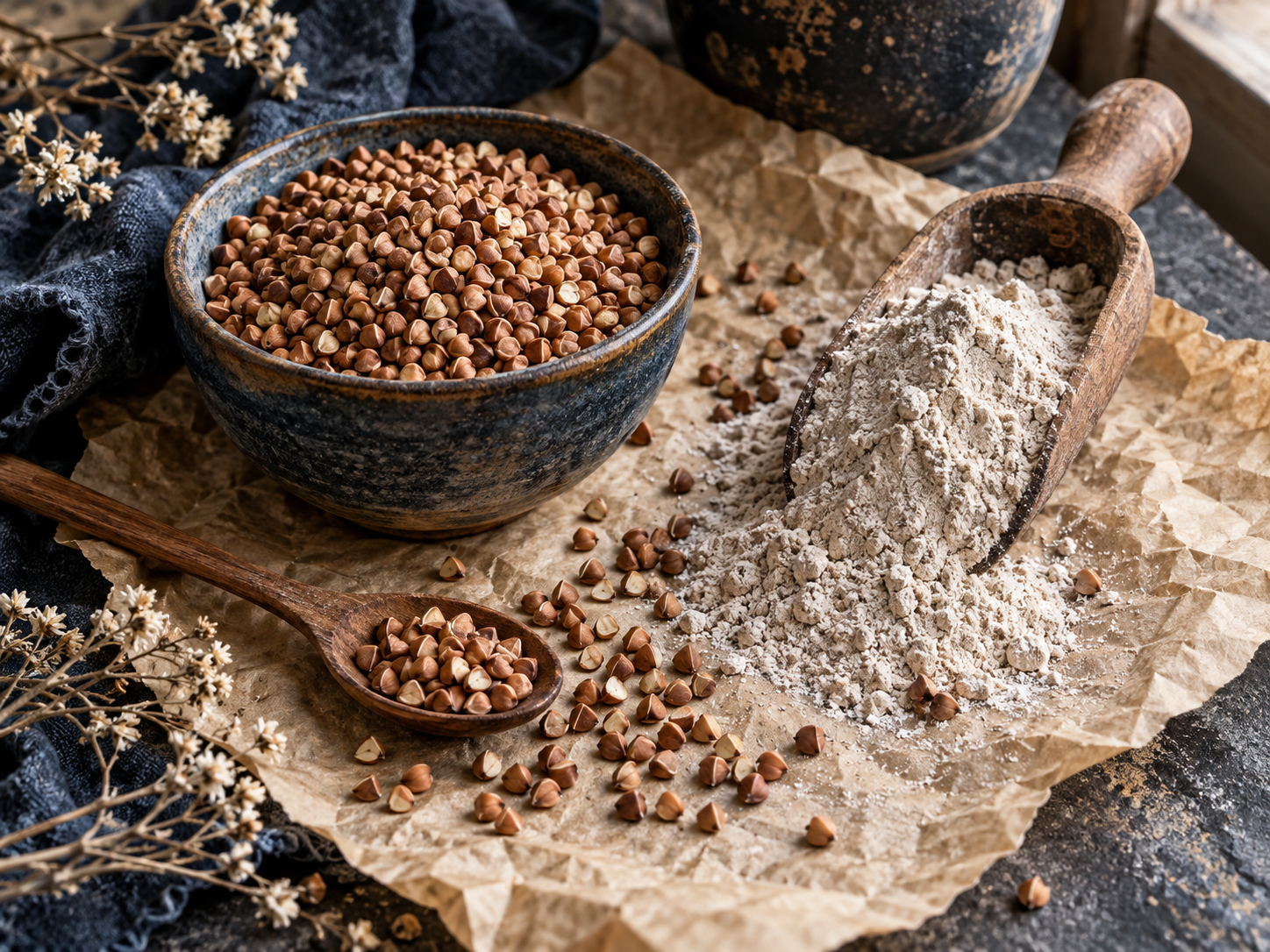
Buckwheat groats and buckwheat flour in a rustic old-world still life.
The seed behind the name

What buckwheat actually is

Not wheat Pseudocereal Whole groats Rutin Gluten-free seed

Buckwheat has one of the most misleading names in food. It sounds like a relative of wheat, but it is not a true cereal grain at all. It is a pseudocereal, which simply means a seed used like a grain. That helps explain why it behaves differently in the kitchen and why its nutritional profile is slightly unusual.

Compared with many cereal grains, buckwheat has a relatively balanced amino-acid profile and is notably richer in lysine than wheat and many other cereals. It is also well known for the flavonoid rutin, although the amount varies enormously by species and processing.

There is also a practical distinction that matters more than most health headlines: whole buckwheat groats, toasted kasha, buckwheat flour and soba noodles are not the same food experience. Once you grind, toast, mix or turn the seed into noodles, texture, speed of eating and the final meal all change.
Buckwheat looks ancient because it is. What makes it interesting is that three cultures taught the same seed completely different jobs.
One seed · Three kitchens

Three cultures that gave buckwheat a different identity

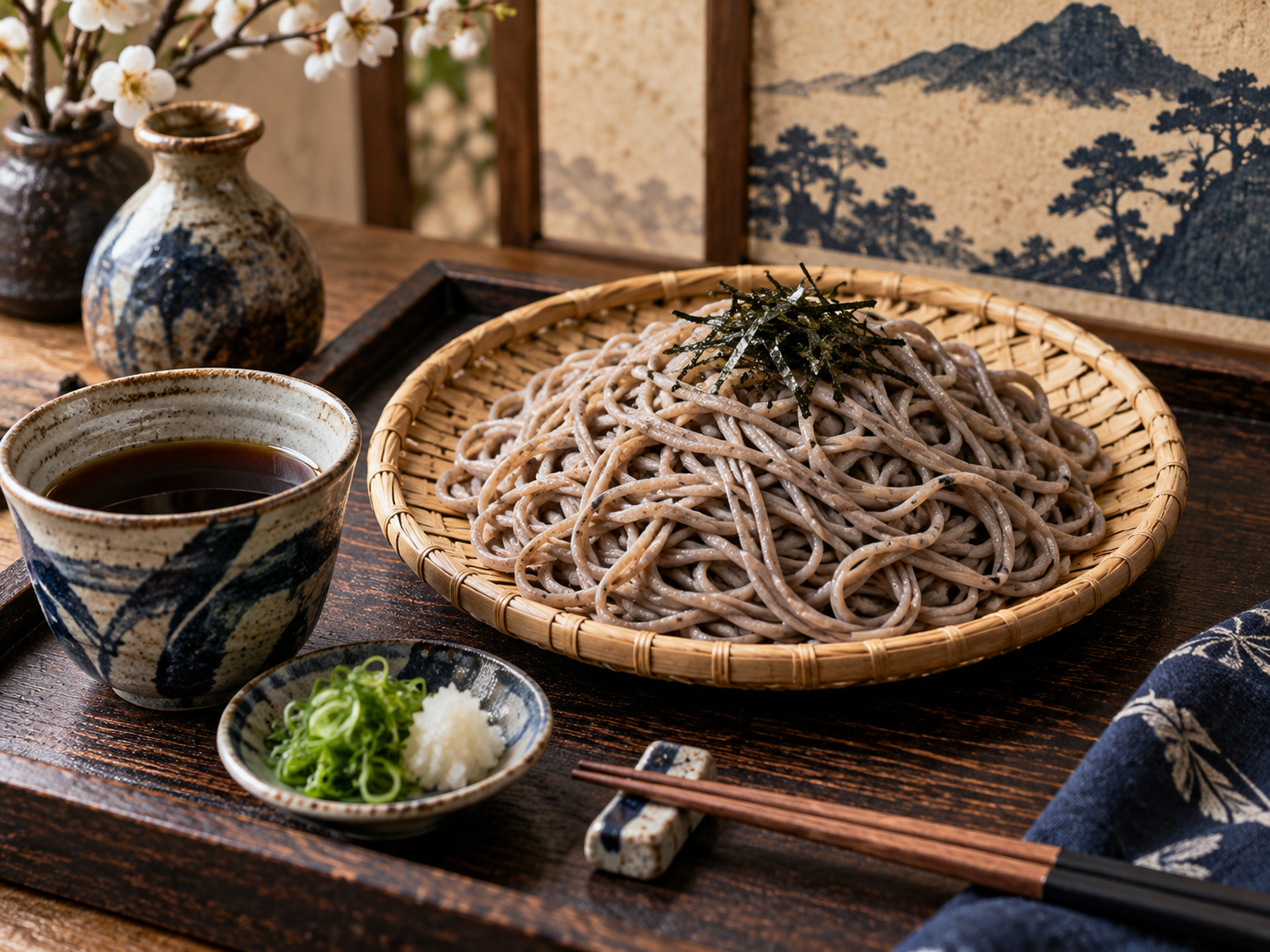
Japanese zaru soba with dipping sauce, scallions and grated daikon.
I · JAPAN

Soba

Japan turned buckwheat into something precise. Soba can be served hot or cold, but cold soba makes the seed's flavor easiest to notice: earthy, clean and slightly nutty.

Japan's agriculture ministry describes soba as buckwheat flour combined with water and a binder, then kneaded and cut into noodles. Regional styles vary dramatically. Izumo soba, for example, is dark and aromatic because the buckwheat is milled closer to the outer portions of the seed, and roughly 20% binding flour may be used.

That is why “soba” on a package does not necessarily mean 100% buckwheat or gluten-free.

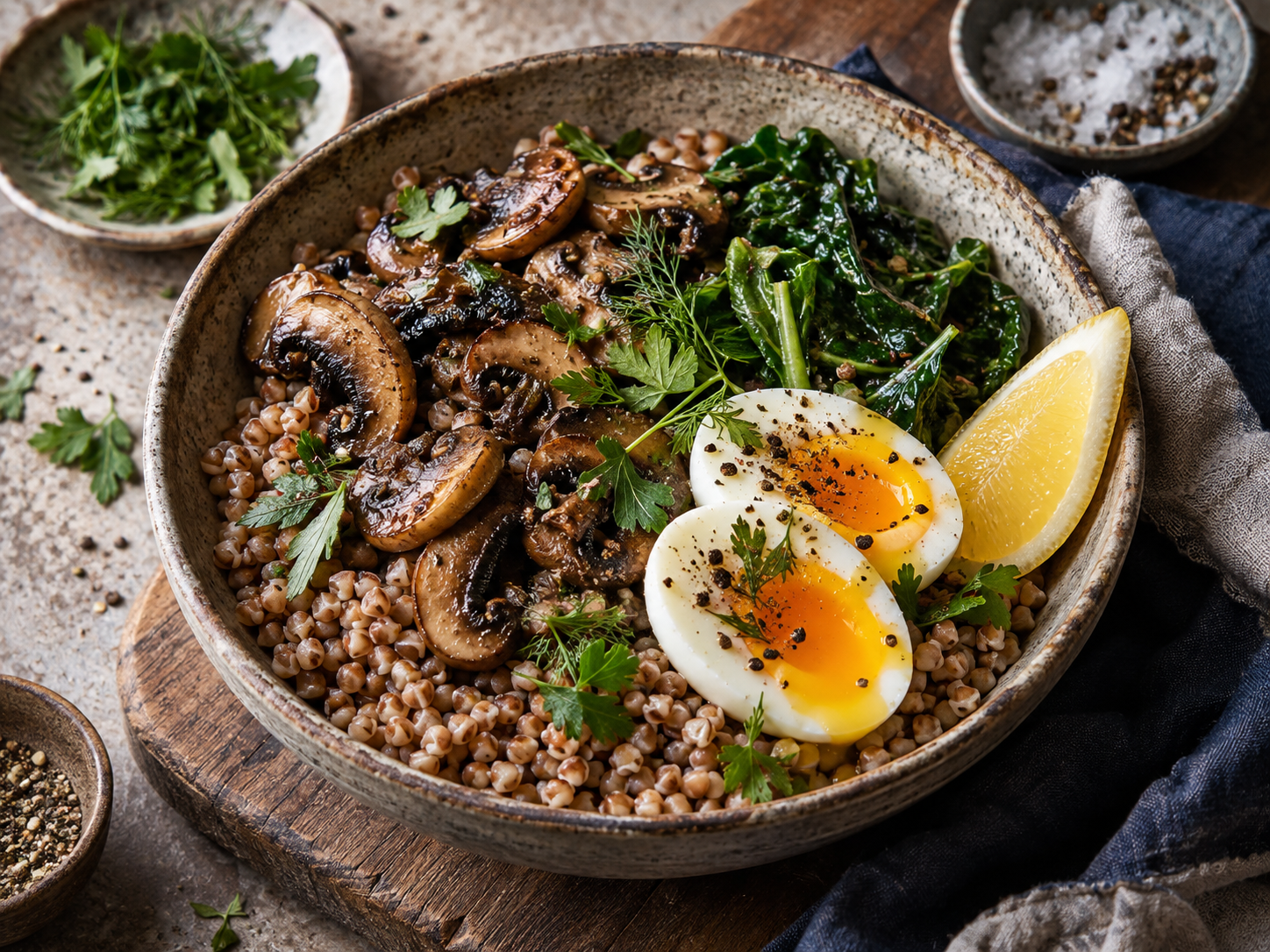
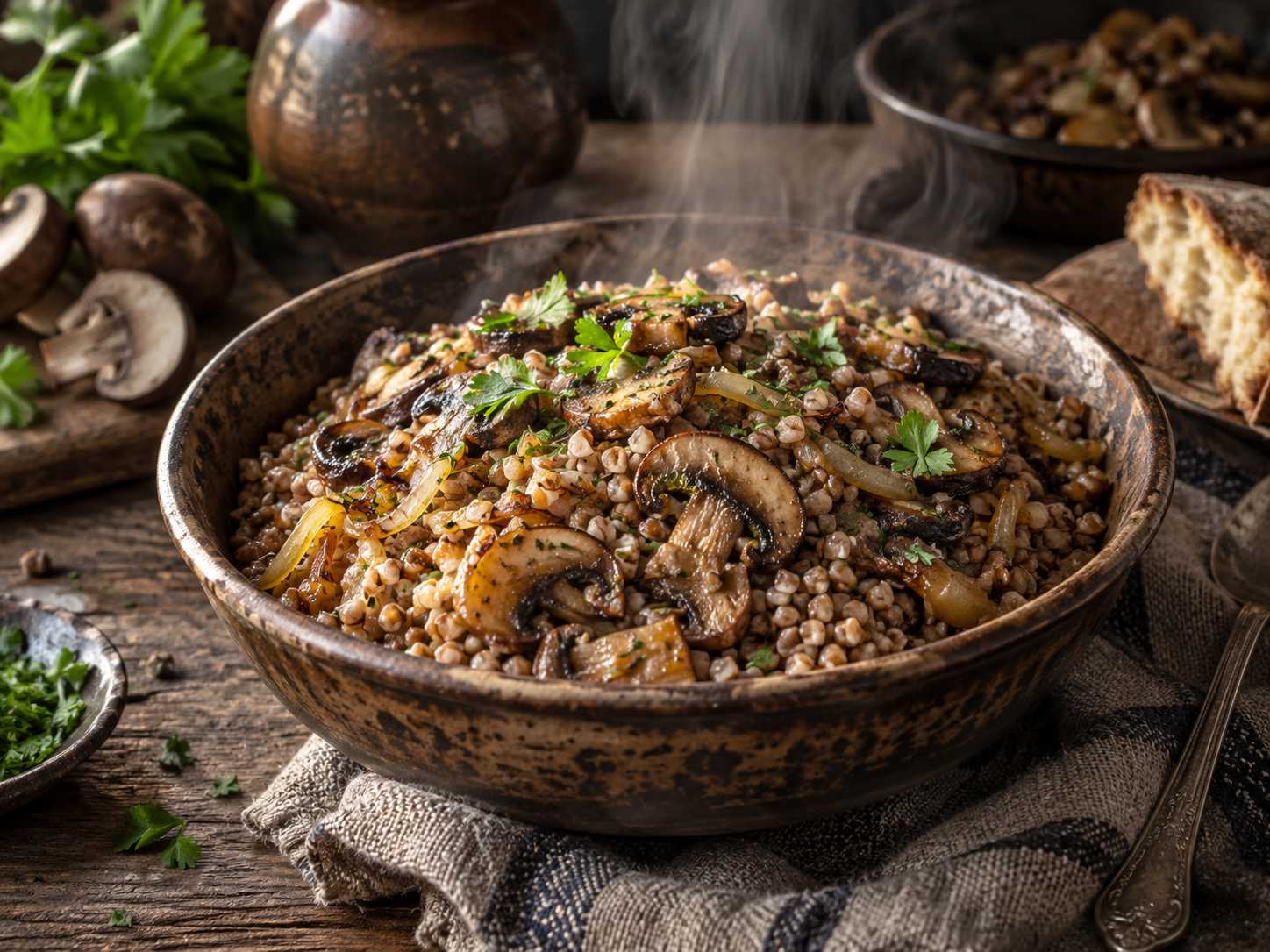
Roasted buckwheat groats with mushrooms and onions.
II · EASTERN EUROPE

Kasha

Across Eastern Europe, buckwheat stayed closer to the seed. Roasted groats became kasha: sturdy, nutty and designed for onions, mushrooms, eggs, broths and other cold-climate foods.

In Poland, buckwheat groats have been part of the food culture for centuries. Culture.pl notes that groats were eaten both by peasants and aristocrats, and roasted buckwheat remains especially associated with mushrooms, gravies, eggs and regional fillings.

This is the version that best teaches you what buckwheat tastes like when nobody is trying to turn it into something else.

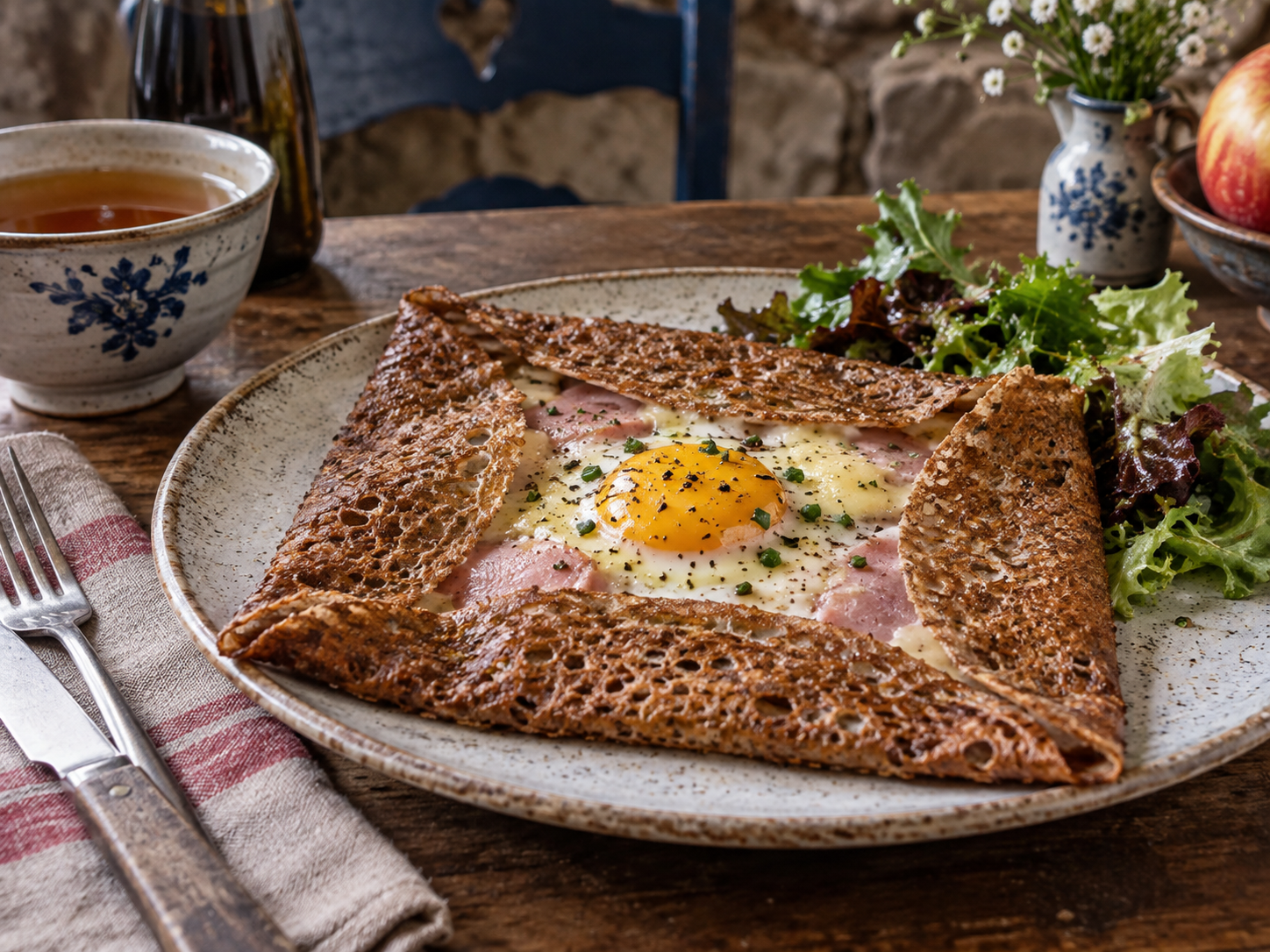
Breton buckwheat galette with egg, ham and cheese.
III · BRITTANY

Galettes

Brittany made buckwheat sociable. Savory buckwheat pancakes, or galettes, are part of the region's food identity, eaten in crêperies, markets and festivals.

Brittany Tourism describes buckwheat as “black wheat” and notes its long cultivation in the region. In eastern Brittany, a traditional galette can even replace bread entirely around a grilled sausage. The batter's darker, more mineral flavor is the point, not a defect.

One seed, now crisp-edged, folded and carrying dinner.

Why it remains interesting nutritionally

Not magic. Just unusually useful for a humble staple.

Protein Reviews commonly place buckwheat protein around roughly 7–15% depending on variety and growing conditions.
Lysine Buckwheat tends to supply more lysine than classic cereal grains, giving its amino-acid pattern a different balance.
Rutin Buckwheat is a recognized food source of rutin. Tartary buckwheat generally contains far more than common buckwheat.
Gluten The seed itself does not contain wheat gluten, but noodles and processed products may include wheat or cross-contact.

Whole versus flour matters. Grinding changes structure. A bowl of intact groats, a thin galette and a plate of noodles all begin with buckwheat but do not behave identically on the plate or in the body.

Processing matters too. Heat, milling, fermentation and cooking can change the retention and availability of flavonoids such as rutin. “Contains rutin” is not the same as saying every buckwheat food contains the same amount.

Stephen's easy version

Warm Buckwheat Bowl with Mushrooms, Egg & Greens

Warm buckwheat bowl with mushrooms, greens, jammy egg, lemon and herbs.

This is the simplest way to understand buckwheat. No complicated baking and no pretending it is rice. Cook the groats until tender, pair them with ingredients that like earthy flavors, and let the seed stay recognizable.

The mushrooms give depth, greens bring freshness, the egg gives protein and richness, and lemon keeps the whole bowl from feeling heavy.

What you need

  • 1 cup buckwheat groats, rinsed
  • 2 cups water or broth
  • 2 to 3 cups sliced mushrooms
  • 1 small onion or 2 shallots
  • 2 large handfuls spinach or other greens
  • 2 eggs
  • Olive oil, salt and pepper
  • Lemon and parsley or dill

How to make it

  1. Cook the buckwheat groats in water or broth until tender and no longer crunchy. Drain excess liquid if necessary.
  2. Sauté the onions in olive oil until soft. Add mushrooms and cook until browned.
  3. Wilt the greens in the same pan and season with salt and pepper.
  4. Boil or soft-cook the eggs to your liking.
  5. Build the bowl with buckwheat, mushrooms, onions, greens and egg. Finish with herbs and lemon.
Food for Back Pain note: This meal works because it is grounded, not magical. Whole-food starch, greens, protein, minerals and enough texture to make the meal feel like food rather than a nutrition assignment.

One seed. Three food cultures.

Buckwheat does not need to become a religion. It just deserves more imagination. If you only know it as a forgotten bag in a health-food aisle, this is the week to change that.