Creatine is usually sold beside workout powders, but its basic job is much broader: it helps cells rapidly restore usable energy. That matters to working muscles, and it also matters to an energy-hungry brain. The science is useful—but the daily habit only works when the powder is easy to take. So this is a food-first guide.
What creatine does for the body and brain
For the body
Creatine helps replenish ATP, the immediate energy currency used during muscular effort. Its strongest evidence is for repeated high-intensity work, strength and better training capacity—especially when paired with resistance exercise.
For the brain
The brain also uses the creatine-phosphocreatine energy system. Research suggests possible benefits for memory and some aspects of cognitive performance, but the results are more variable than the muscle evidence and are not guaranteed for everyone.
Serving size and the form to use
Plain creatine monohydrate
This is the established, extensively studied form. A loading phase is optional—not necessary. Taking a normal serving consistently will build stores more gradually. Follow the product label, and do not double up just because you missed a day.
Timing is flexible. Breakfast, lunch, dinner or after exercise can all work. Consistency matters more than chasing a perfect minute on the clock.
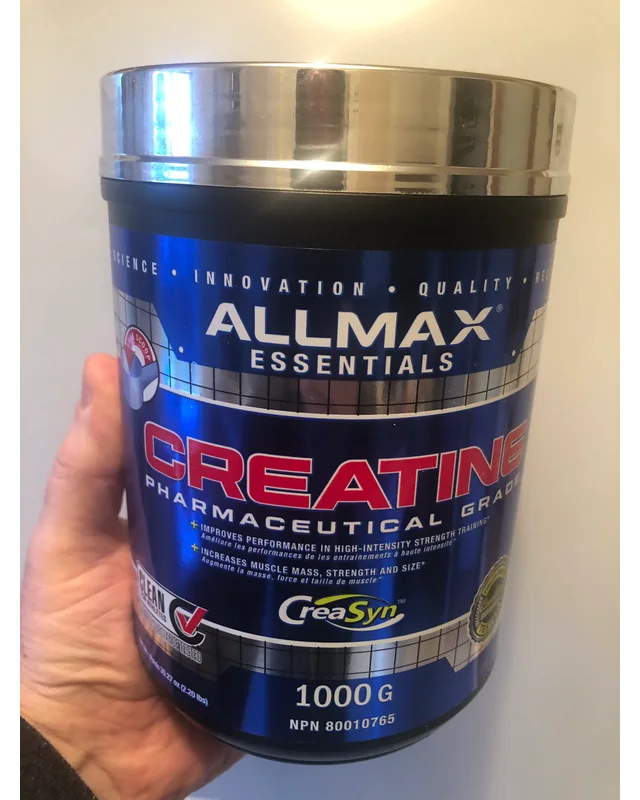
ALLMAX Essentials Creatine
I use this plain creatine monohydrate. The important feature for the recipes below is that it is unflavoured, so it can disappear into sweet or savoury food without fighting the taste.
Affiliate link: Food for Back Pain may earn a small commission at no extra cost to you.
Check the current label, ingredients and serving scoop before use. Product packaging may change.
Where creatine disappears—and where it does not
Plain creatine monohydrate is nearly tasteless. The challenge is usually texture, not flavour. In thin cold liquid it may settle or feel sandy; in a thick food it is barely noticeable.
Best places to hide it
- Smoothies and protein shakes
- Greek yogurt and pudding
- Oatmeal and overnight oats
- Applesauce and mashed fruit
- Mashed potatoes and thick soup
- Hummus and soft dips
More likely to feel gritty
- A tiny glass of cold water
- Clear juice or fizzy drinks
- Thin broth
- Dry cereal or dry food
- Anything you cannot stir thoroughly
10 easy ways to use creatine in food
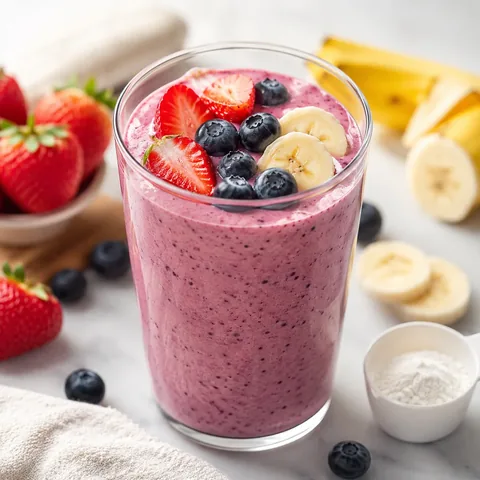
Berry-Banana Creatine Smoothie
The easiest place to begin. Frozen fruit and yogurt completely hide creatine’s slightly powdery texture.
Ingredients and simple method
Use
- 1 banana
- ½ cup frozen berries
- ¾ cup milk, yogurt or a combination
- 3–5 g creatine monohydrate
- Honey, cinnamon or collagen powder, optional
Make it
- Blend everything until completely smooth.
- Drink soon after mixing rather than leaving it prepared all day.
Kitchen tip: For an extra-thick smoothie, use a frozen banana and Greek yogurt.

Berry Yogurt Crunch Bowl
Greek yogurt is dense enough to hold the powder evenly, while fruit, honey and granola make it feel like a proper breakfast.
Ingredients and simple method
Use
- ¾ cup Greek yogurt
- 3–5 g creatine monohydrate
- Fresh berries
- 1–2 tbsp granola
- Small drizzle of honey
Make it
- Stir the creatine into two spoonfuls of yogurt first.
- Fold in the remaining yogurt and add the toppings.
Kitchen tip: The small-first mixing method prevents dry pockets at the bottom of the bowl.
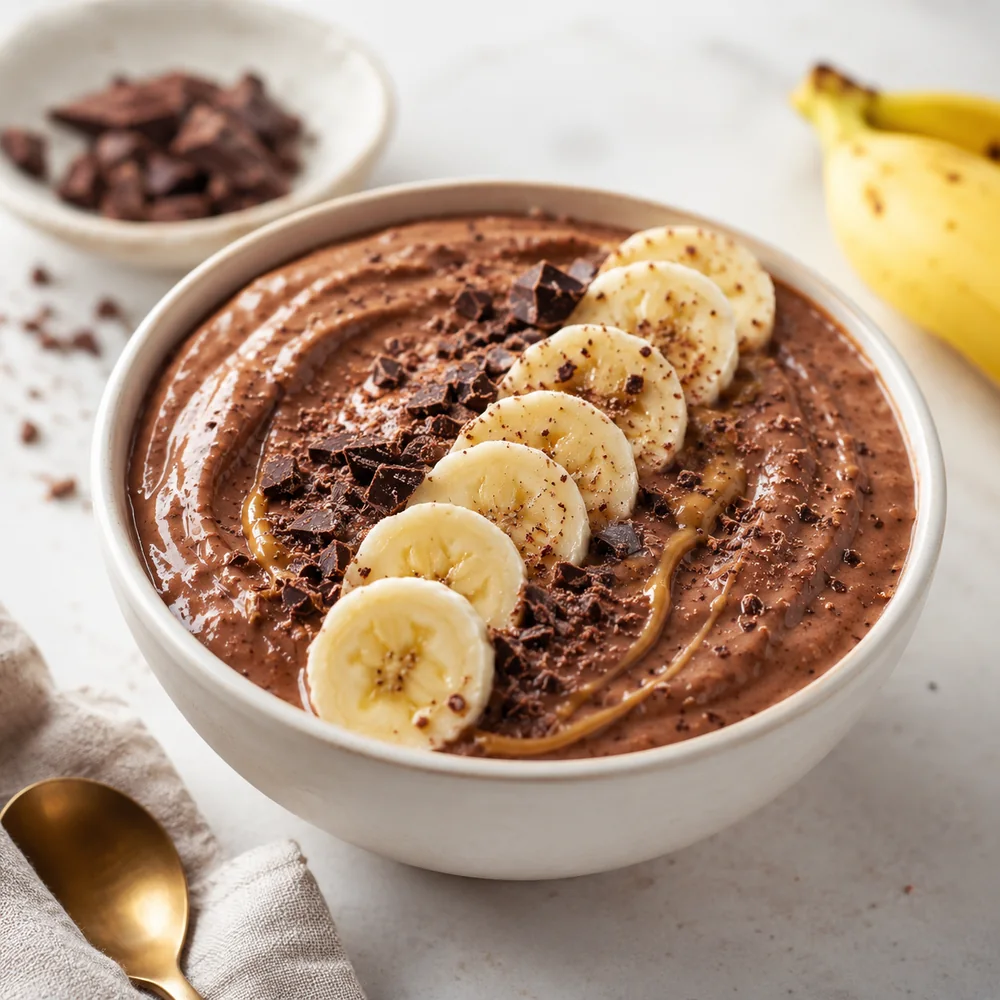
Chocolate Banana Pudding Bowl
Cocoa and banana cover almost everything. This is especially useful for anyone who dislikes the idea of a supplement-tasting breakfast.
Ingredients and simple method
Use
- ¾ cup Greek yogurt or blended cottage cheese
- ½ ripe banana, mashed
- 1 tbsp cocoa powder
- 3–5 g creatine monohydrate
- 1 tsp peanut or almond butter, optional
Make it
- Mash the banana until smooth.
- Stir in cocoa, creatine and yogurt; finish with banana slices.
Kitchen tip: A very ripe banana provides sweetness without needing much honey.
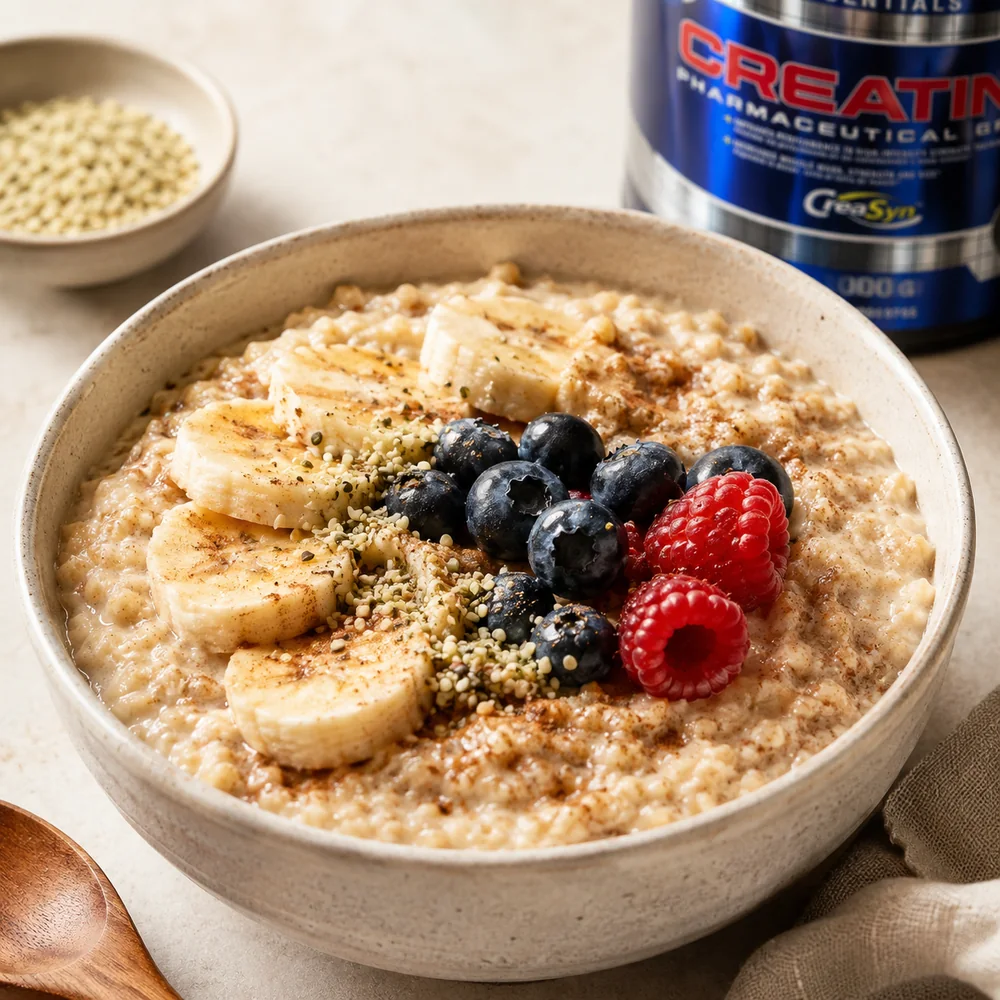
Warm Creatine Oatmeal
Oatmeal is one of the best texture matches for creatine. Stir it into the finished bowl and add the fruit, seeds and spices you already enjoy.
Ingredients and simple method
Use
- 1 prepared bowl of oatmeal
- 3–5 g creatine monohydrate
- Banana and berries
- Cinnamon
- Hemp seeds or nut butter, optional
Make it
- Cook the oatmeal normally.
- Remove from the heat, stir in creatine thoroughly, then add toppings.
Kitchen tip: Too thick? Add a splash of milk after mixing.
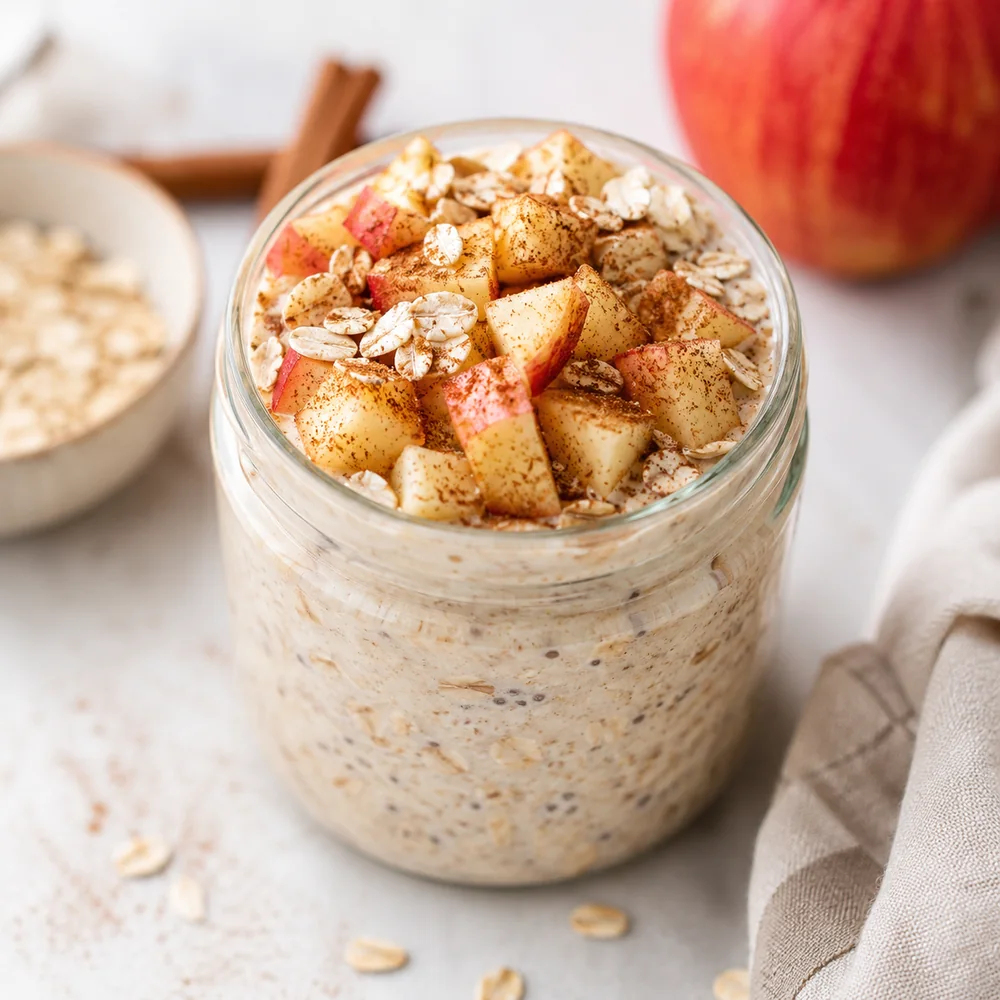
Apple-Cinnamon Overnight Oats
Prepare the oats the night before, but stir the creatine into the individual serving in the morning. The fresh apple and cinnamon do the rest.
Ingredients and simple method
Use
- ½ cup rolled oats
- ½ cup milk
- ¼ cup yogurt
- ½ apple, diced
- Cinnamon
- 3–5 g creatine monohydrate, added before eating
Make it
- Combine everything except creatine and refrigerate overnight.
- In the morning, stir in creatine and loosen with milk as needed.
Kitchen tip: Adding creatine at serving time keeps the routine simple and avoids long storage after mixing.

Applesauce-Yogurt Cinnamon Cup
This mild little cup is useful when you want something quick, easy to swallow and not especially filling.
Ingredients and simple method
Use
- ½ cup unsweetened applesauce
- ¼–½ cup yogurt
- 3–5 g creatine monohydrate
- Cinnamon
Make it
- Mix the creatine into the yogurt first.
- Fold in applesauce, dust with cinnamon and eat promptly.
Kitchen tip: Use more yogurt for a thicker texture or more applesauce for a lighter cup.
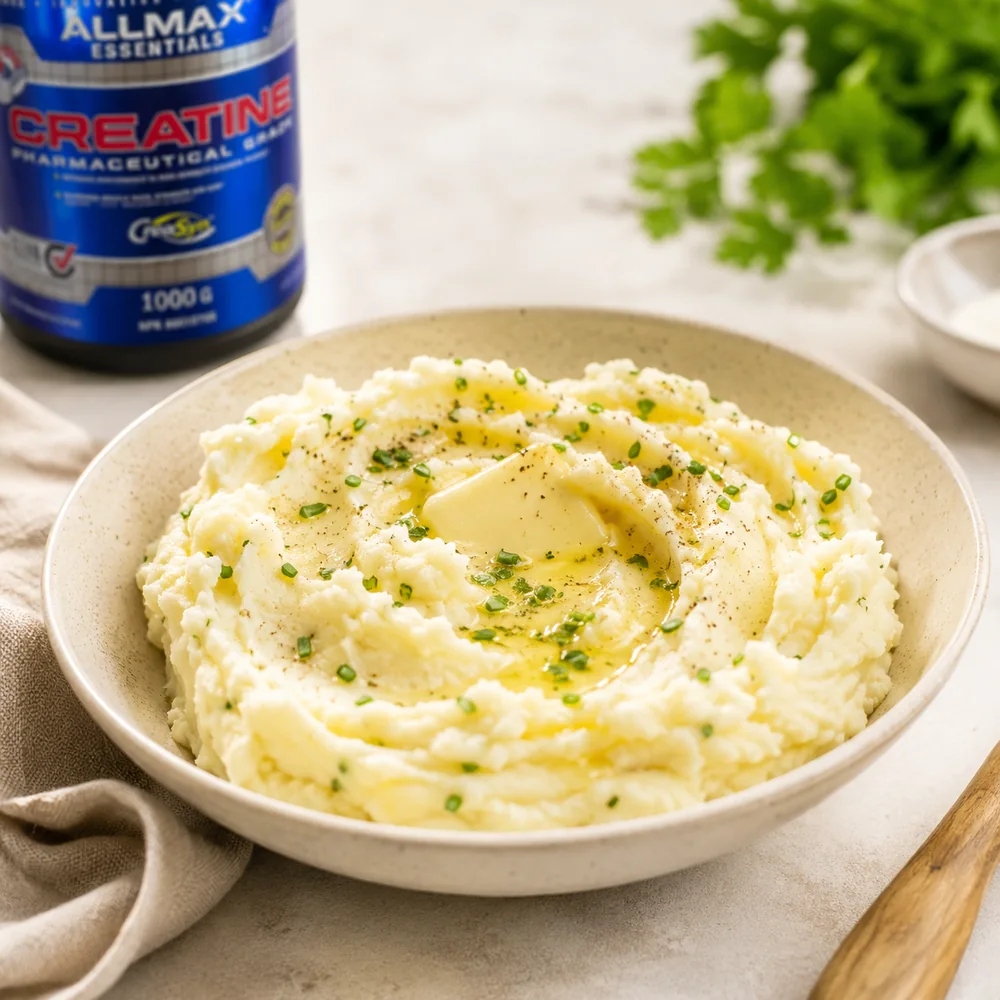
Buttery Herb Mashed Potatoes
Creatine does not have to live in sweet food. Mashed potatoes can hide it so well that you may forget it is there.
Ingredients and simple method
Use
- 1 individual serving mashed potatoes
- 3–5 g creatine monohydrate
- Butter or olive oil
- Chives, herbs and pepper
Make it
- Plate one serving of mashed potatoes.
- Stir in the creatine thoroughly, then add butter and herbs.
Kitchen tip: Mix it into your own serving—not the entire family pot—so the amount remains accurate.

Creamy Vegetable Soup
Squash, potato, carrot and blended lentil soups have enough body to disperse creatine without changing the flavour.
Ingredients and simple method
Use
- 1 bowl thick blended soup
- 3–5 g creatine monohydrate
- Herbs, pepper or yogurt for garnish
Make it
- Serve the soup and let it cool from piping hot for a moment.
- Stir in creatine until no powder remains visible.
Kitchen tip: Thick blended soups work better than clear broth.
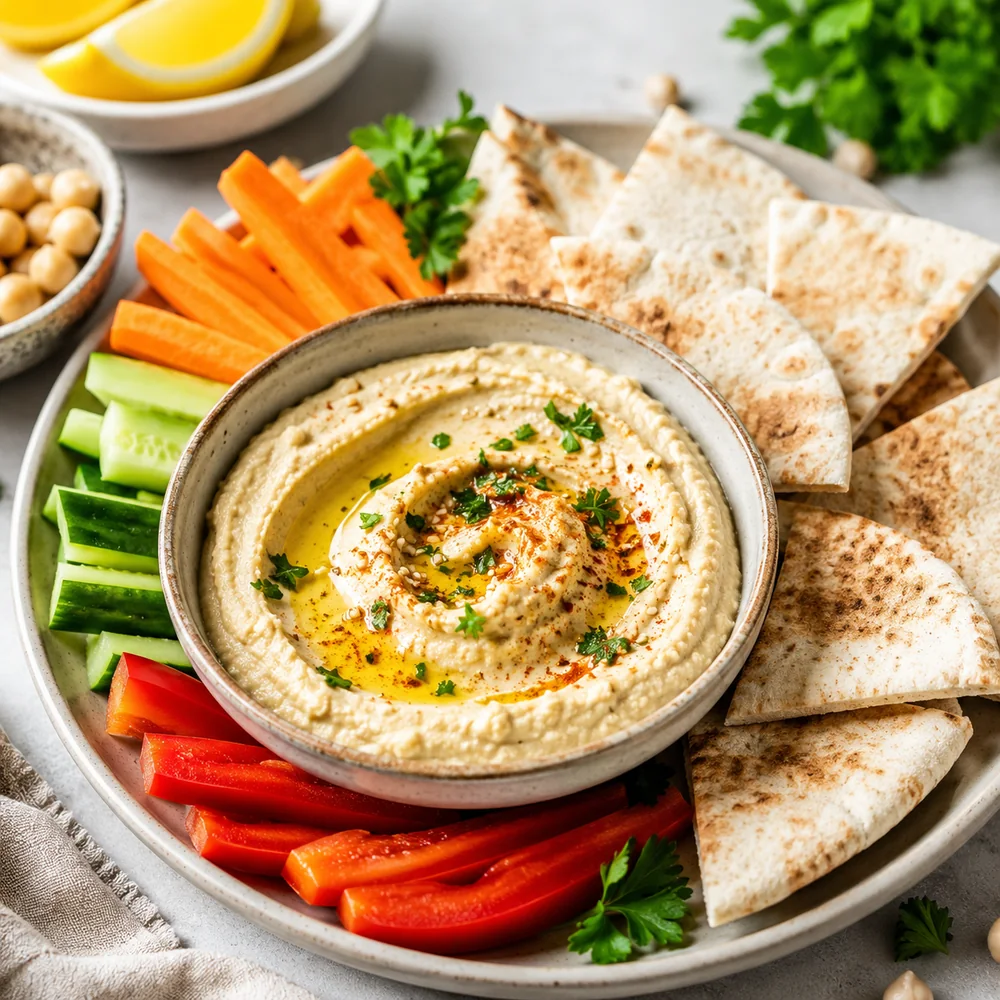
Creamy Hummus Snack Plate
A personal bowl of hummus is a surprisingly easy carrier, especially with crisp vegetables and warm pita.
Ingredients and simple method
Use
- ⅓–½ cup hummus
- 3–5 g creatine monohydrate
- Pita wedges
- Cucumber, carrots and peppers
Make it
- Stir creatine into a small individual bowl of hummus.
- Add a teaspoon of water or olive oil if it becomes too thick.
Kitchen tip: Do not mix a full store-bought container unless you can divide every serving precisely.
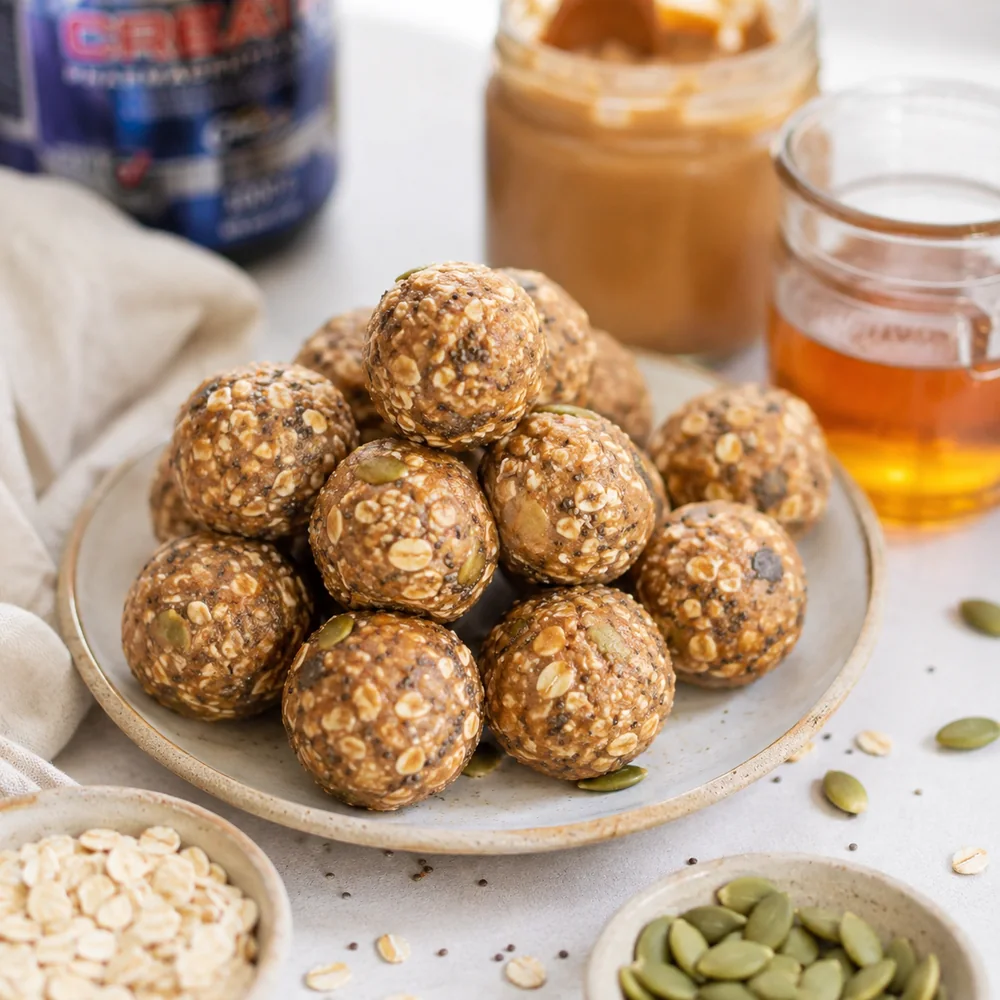
Single-Serving Oat Energy Bites
Energy bites work best as a clearly measured single serving. Make three small bites and eat the full serving rather than guessing from a large batch.
Ingredients and simple method
Use
- 3 tbsp quick oats
- 1½ tbsp peanut or seed butter
- 1 tsp honey
- 3–5 g creatine monohydrate
- 1 tsp chia, hemp or pumpkin seeds
Make it
- Mix everything into a soft dough.
- Roll into three small bites and eat the three as one measured serving.
Kitchen tip: For a larger batch, multiply every ingredient exactly and label the number of complete servings.
The three-step method for a smooth texture
Start small. Put the creatine into two or three spoonfuls of the food first.
Stir completely. Make a smooth little base with no visible dry pockets.
Add the rest. Fold in the remaining food, then eat or drink it reasonably soon.
Creatine dissolves more readily in warmer liquid, but it becomes less stable when left sitting in solution—particularly as time, heat and acidity increase. The practical rule is easy: mixing it into a warm finished food and eating it shortly afterward is very different from storing a prepared acidic drink for days.
Creatine FAQ
How much creatine should I use each day?
A simple daily amount used in research is 3 to 5 grams of creatine monohydrate. Loading is optional, not required. Follow the product label and any advice from your healthcare professional.
Does creatine have to be taken before a workout?
No. Consistent daily use matters more than a precise time of day. It can be taken with breakfast, lunch, dinner or after exercise.
Can creatine go into hot food?
It can be stirred into a finished warm food and eaten promptly. Creatine is less stable after sitting dissolved—especially over time in hot or acidic liquids—so avoid preparing liquid mixtures days in advance.
Will creatine make food taste different?
Plain creatine monohydrate is nearly tasteless, but it can feel slightly chalky or gritty. Thick foods such as yogurt, oatmeal, mashed potatoes and smoothies hide the texture best.
Can creatine help the brain as well as the body?
Creatine has strong evidence for muscle energy and repeated high-intensity performance. Research on memory and other cognitive outcomes is promising, but results are not equally strong for every person or every cognitive skill.
Who should speak with a healthcare professional first?
People with kidney disease, those who are pregnant or breastfeeding, and anyone receiving treatment for a significant health condition should ask a qualified healthcare professional before using creatine. Tell your provider about creatine use when laboratory kidney markers are being interpreted.
Who should ask a professional first?
Creatine monohydrate has a strong safety record in healthy adults when used appropriately. People with kidney disease, those who are pregnant or breastfeeding, and anyone being treated for a significant health condition should speak with a qualified healthcare professional before starting it. Creatine use can also affect the interpretation of creatinine-related laboratory results, so tell your healthcare provider that you take it.
Research sources
- NIH Office of Dietary Supplements: Dietary Supplements for Exercise and Athletic Performance
- International Society of Sports Nutrition position stand: safety and efficacy of creatine supplementation
- Common questions and misconceptions about creatine supplementation
- 2024 systematic review and meta-analysis of creatine and cognitive function
- 2024 meta-analysis of creatine, resistance training and strength
- Review of creatine monohydrate bioavailability, stability, efficacy and safety