Food for Back Pain • Real Food Ideas
Lion's Mane Powder: 10 Easy Ways to Put It Into Real Food
The lion's mane we use at Food for Back Pain is not a fresh mushroom sitting beside the frying pan. It is an organic extract powder, which makes it one of the easiest ingredients in the stack to quietly add to food you already eat.
One of the ideas behind Food for Back Pain has always been simple: you do not have to reinvent breakfast, lunch and dinner to improve what is going into your body. You can take foods you already like and layer useful ingredients into them.
Lion's mane, Hericium erinaceus, fits that philosophy almost perfectly. The extract powder has a mild earthy flavour, mixes into liquids and sauces, works in both sweet and savoury food, and does not need to become the centrepiece of a meal.
Why is it in the Food for Back Pain stack at all? Lion's mane contains compounds that have attracted research interest because of their relationship to nerve growth factor and neuronal biology. That mechanism is interesting, particularly when the conversation includes the nervous system and nerve irritation, but the human evidence is still early. This is not a proven nerve-regeneration treatment or a cure for back pain. It is a food-based layer with a plausible mechanism that makes more sense as a consistent habit than as a dramatic intervention.
The exact lion's mane I use
The product linked from Food for Back Pain is Real Mushrooms Organic Lion's Mane Extract Powder. It is made from fruiting bodies and is hot-water extracted. The product directions list 1 gram, about ½ teaspoon, per day for adults.
See the lion's mane powder on Amazon →
Affiliate disclosure: If you purchase through this link, I may receive a small commission at no extra cost to you. I only link to products I use or would recommend.
First question: can you heat lion's mane powder?
Yes. This is an important distinction because lion's mane extract powder is not the same thing as a delicate cold-pressed oil. The product we use is itself made through hot-water extraction. Warm porridge, soup, coffee, tea and sauces are therefore completely reasonable places to use it.
I still use one practical rule: there is rarely a reason to roast the powder at 450°F for an hour if I can stir it in later. Normal heat is fine. For prolonged, aggressive high heat, adding it toward the end is a sensible conservative choice because research has not mapped the stability of every lion's mane compound through every possible cooking process.
What about cold food, refrigeration and freezing?
Cold food is easy. Smoothies, overnight oats, chia pudding, yogurt and cold sauces all work. The powder disperses best if you whisk it into a small amount of liquid first or let a blender do the work.
Refrigeration is also practical once the powder has been mixed into food. Freezing is useful for things like smoothie pops and frozen portions. There is not much direct research comparing every active compound before and after ordinary household freezing, so I would not make the stronger claim that freezing preserves absolutely everything unchanged. Practically, though, there is no reason that a frozen smoothie pop cannot be an occasional delivery method.
Yes. Bowls, soup, coffee, sauces.
Yes. Smoothies, yogurt, chia pudding.
Practical, with limited compound-specific stability data.
Not necessary. Add later when convenient.
Texture and flavour: what happens when you add it?
At the amounts we are talking about, lion's mane powder is not going to turn your breakfast into mushroom soup. It has a mild earthy flavour and a very fine texture. In a thick food such as chia pudding, oatmeal, yogurt or a creamy sauce, it almost disappears. In plain water, you will notice it more.
Sweet flavours that hide it particularly well include cinnamon, banana, cacao, berries, vanilla and raw honey. Savoury flavours that work beautifully include garlic, broth, miso, tomato, herbs and creamy pasta sauces.
Do not build a meal around the powder. Put the powder into a meal that already works.
10 lion's mane powder food ideas
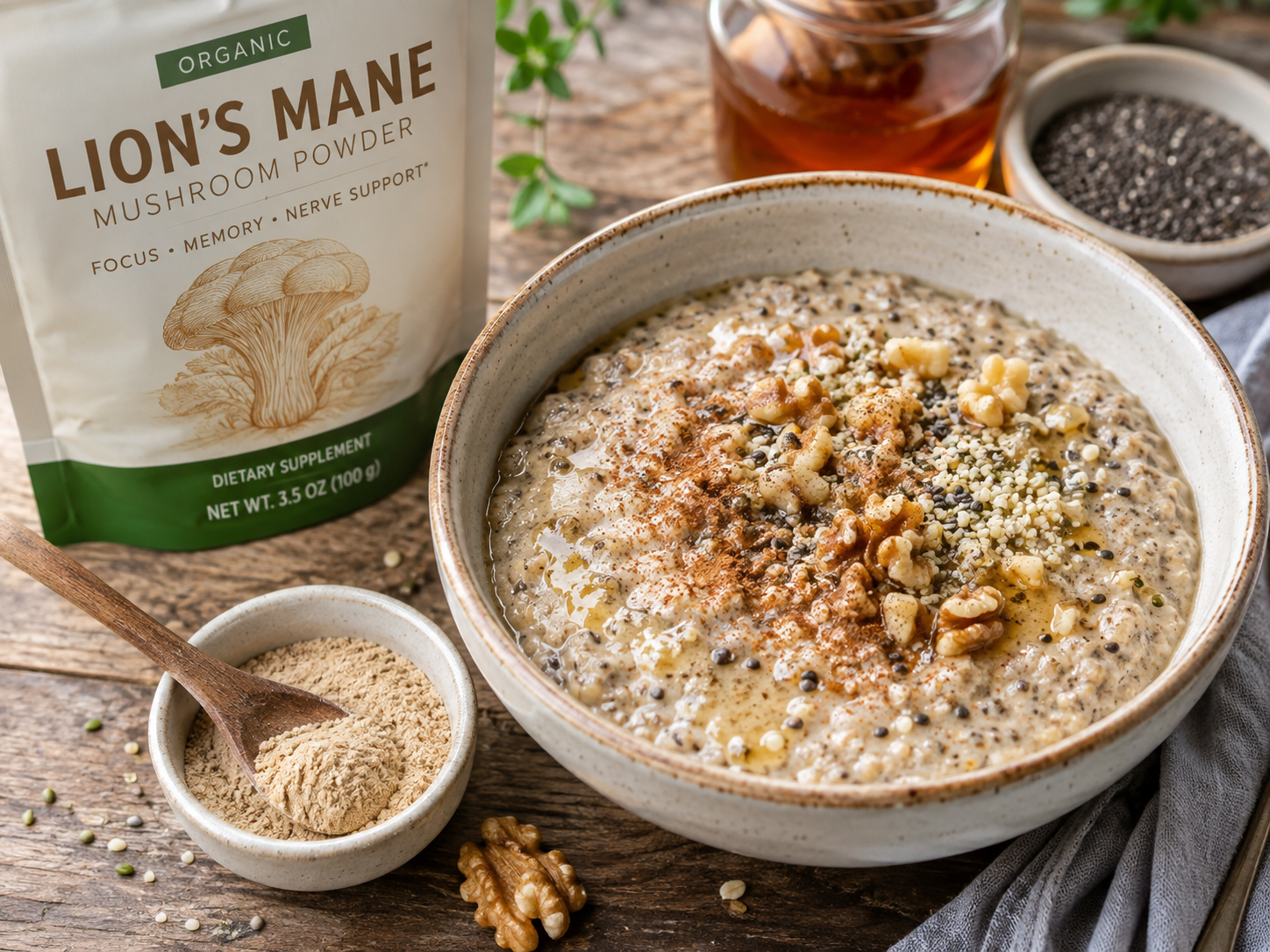
1. Lion's Mane Monster Mash
This is the obvious starting point because it is already where lion's mane lives in the Food for Back Pain world.
For one bowl:
- Your usual warm Monster Mash base
- 1 serving lion's mane extract powder, or the amount directed on your label
- Chia and hemp seeds
- Cinnamon
- Raw honey
- Walnuts and Udo's oil added only after the heat step
How: Build the warm bowl as usual. Stir the lion's mane powder in with the water-soluble ingredients. Once the hot step is finished, add the cold-sensitive fats, walnuts and Udo's oil last.
2. Berry Banana Lion's Mane Smoothie
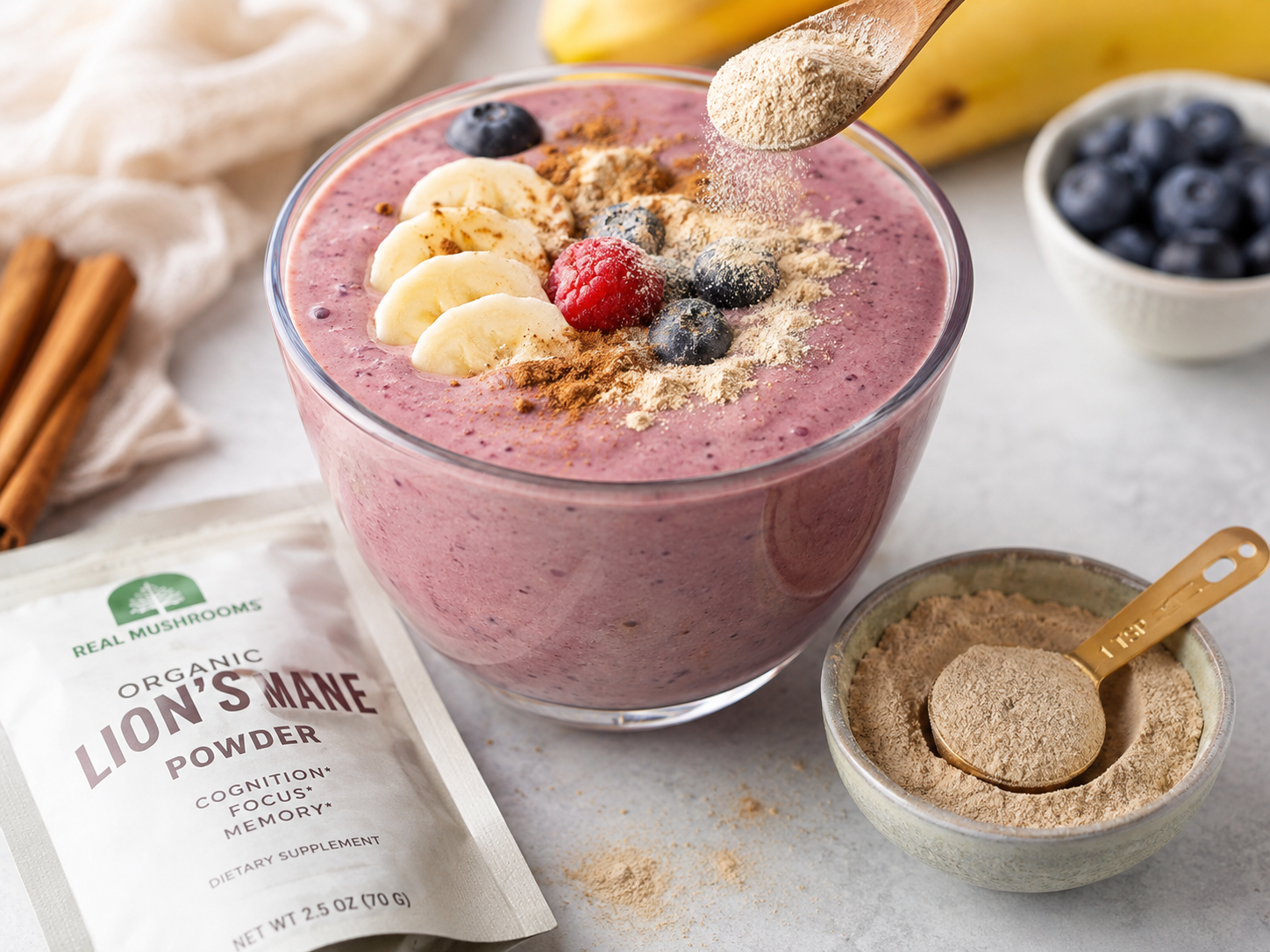
- 1 banana
- 1 cup frozen berries
- 1 cup milk or unsweetened plant milk
- 1 serving lion's mane powder
- ½ teaspoon Ceylon cinnamon
- Raw honey to taste
- Optional hemp seeds or collagen
How: Blend until completely smooth. The berries, banana and cinnamon make the earthiness of the mushroom almost impossible to notice.
3. Overnight Lion's Mane Chia Pudding
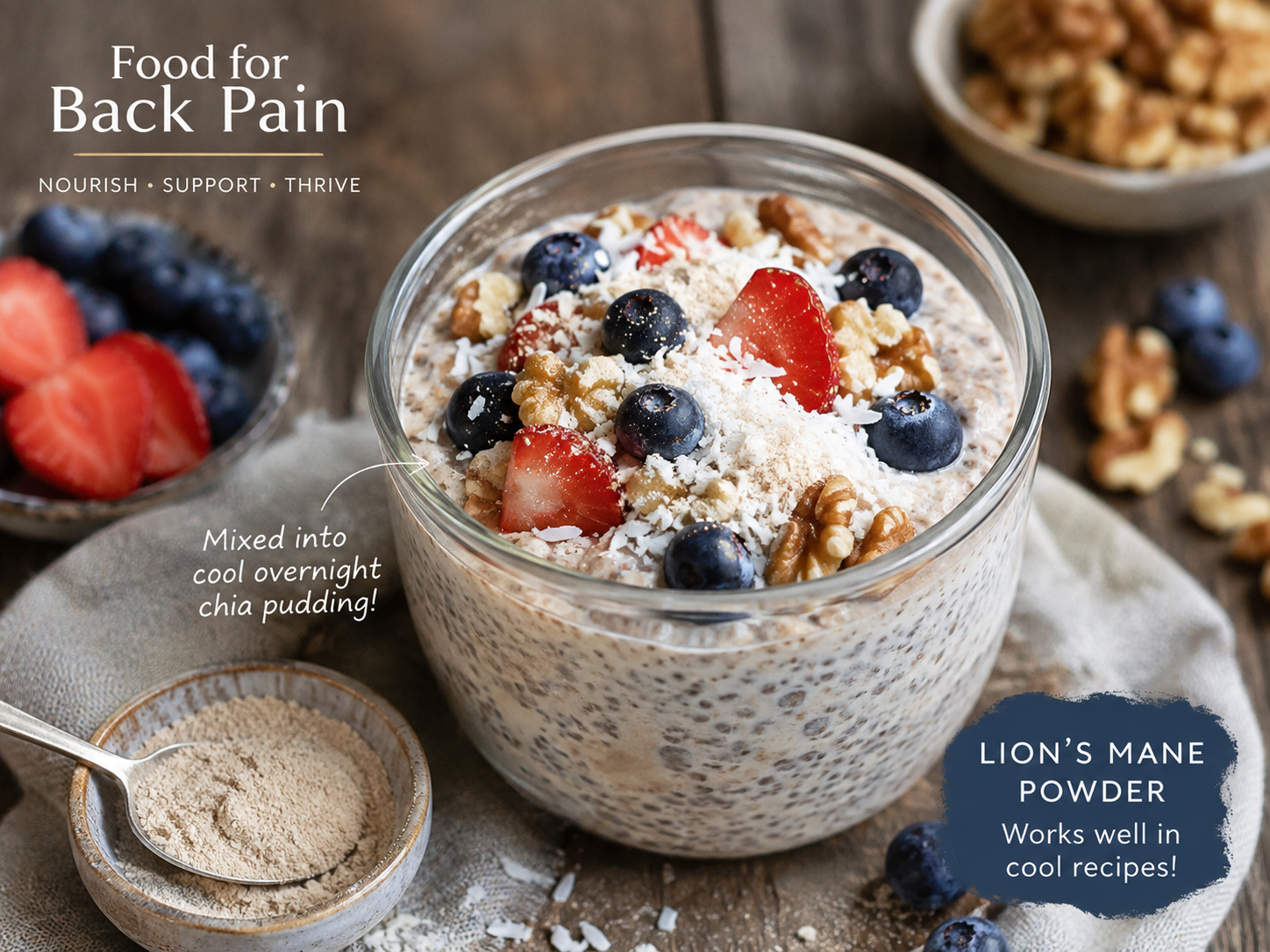
- 3 tablespoons chia seeds
- 1 cup milk or unsweetened plant milk
- 1 serving lion's mane powder
- ½ teaspoon cinnamon
- 1 teaspoon raw honey
- Berries, walnuts and unsweetened coconut to finish
How: Whisk everything except the toppings together, refrigerate overnight and stir again in the morning. Add berries, walnuts and coconut just before eating.
4. Creamy Lion's Mane Vegetable Soup
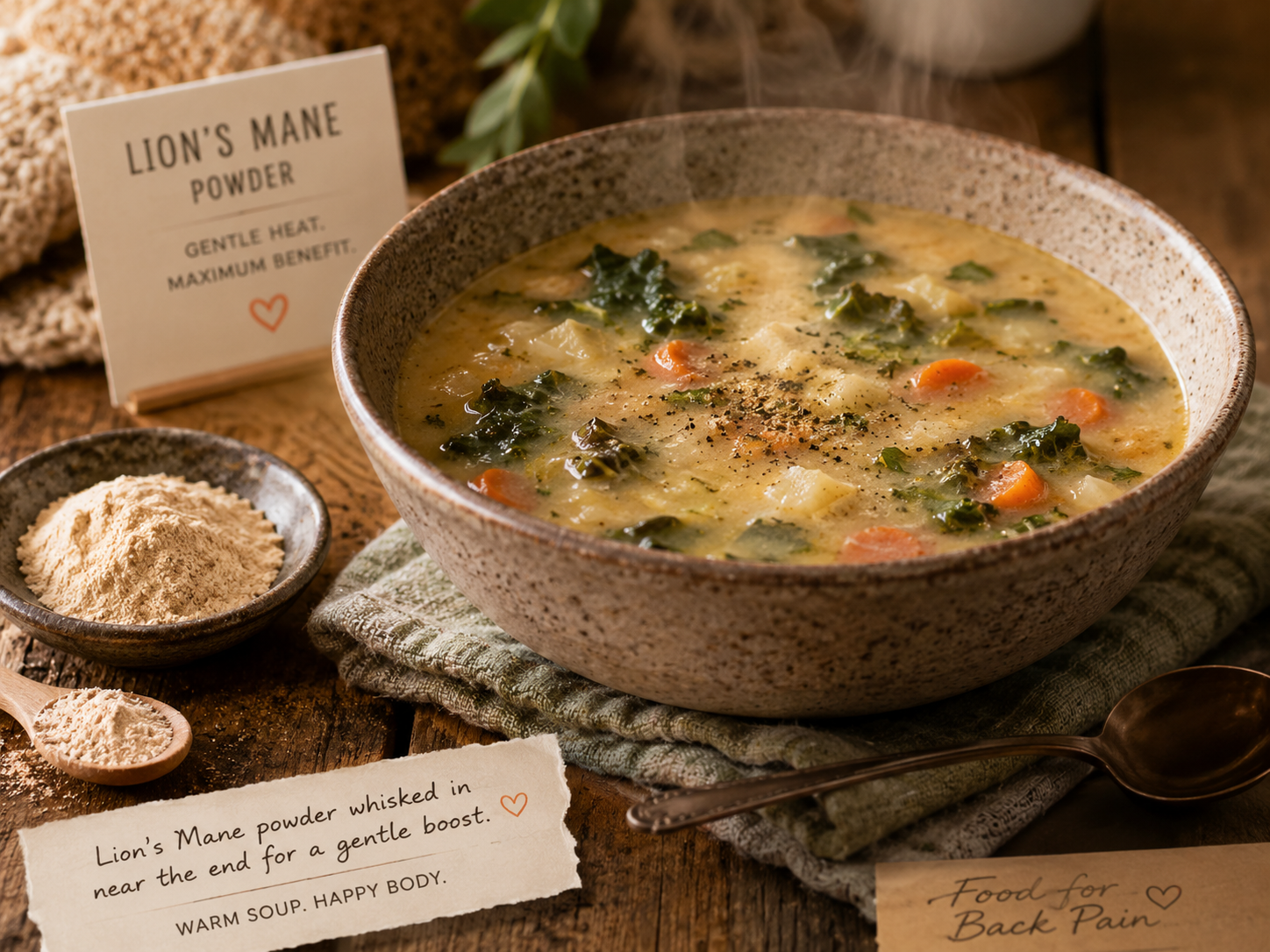
- 2 cups vegetable or chicken broth
- Carrot, celery, onion and leafy greens
- Garlic and black pepper
- A splash of milk, coconut milk or cream if desired
- 1 serving lion's mane powder
How: Cook the soup normally. Near the end, whisk the lion's mane into a few spoonfuls of warm broth until smooth, then stir it back into the pot. This avoids clumps and avoids unnecessary prolonged heating.
5. Lion's Mane Garlic Cream Pasta
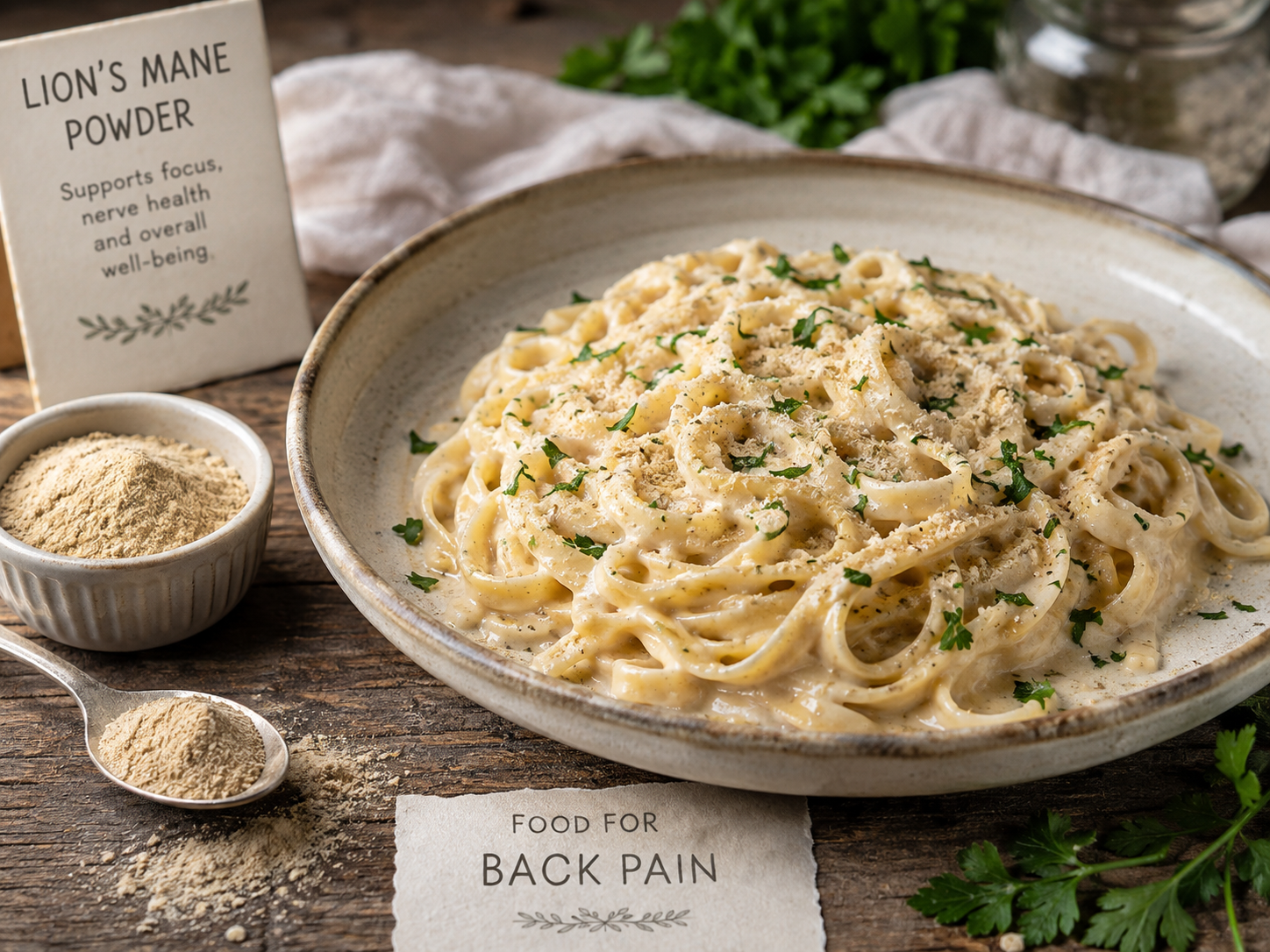
- Your favourite pasta
- Garlic
- Olive oil or butter
- Milk, cream or a cashew cream
- Parsley and black pepper
- 1 serving lion's mane powder per portion
How: Make the sauce first. Lower the heat, whisk the powder into the creamy sauce, then toss with the cooked pasta. Garlic and black pepper are excellent at making the lion's mane disappear into the background.
6. Savoury Lion's Mane Stir-Fry Sauce
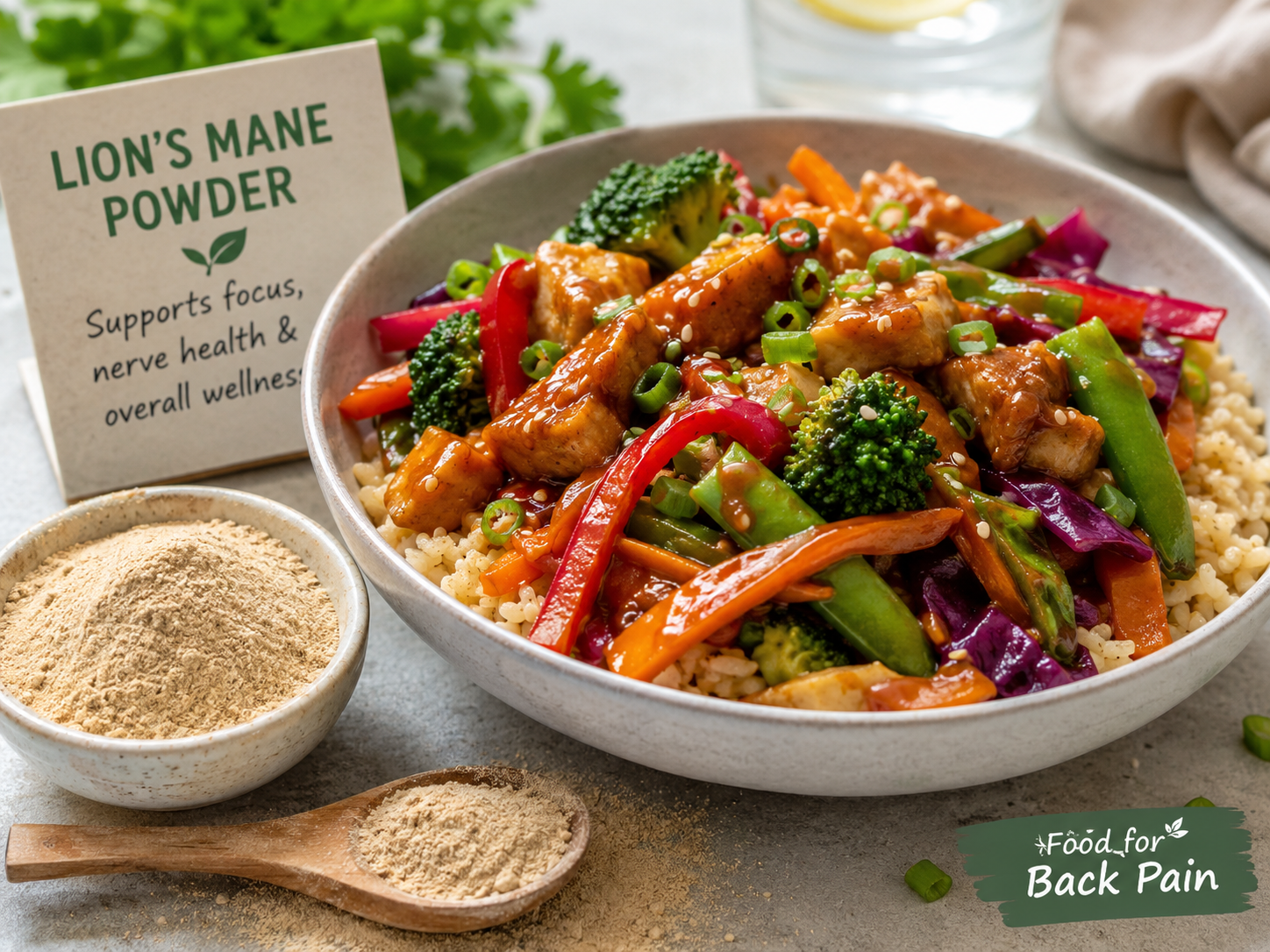
- 1 tablespoon tamari or soy sauce
- 1 tablespoon water
- 1 teaspoon honey
- Fresh ginger and garlic
- Squeeze of lime
- 1 serving lion's mane powder
How: Whisk the sauce together until the powder is fully dispersed. Cook your vegetables and protein, then add the sauce toward the end and toss briefly. Serve over brown rice, quinoa or your favourite grain.
7. Lion's Mane Cacao or Cinnamon Latte
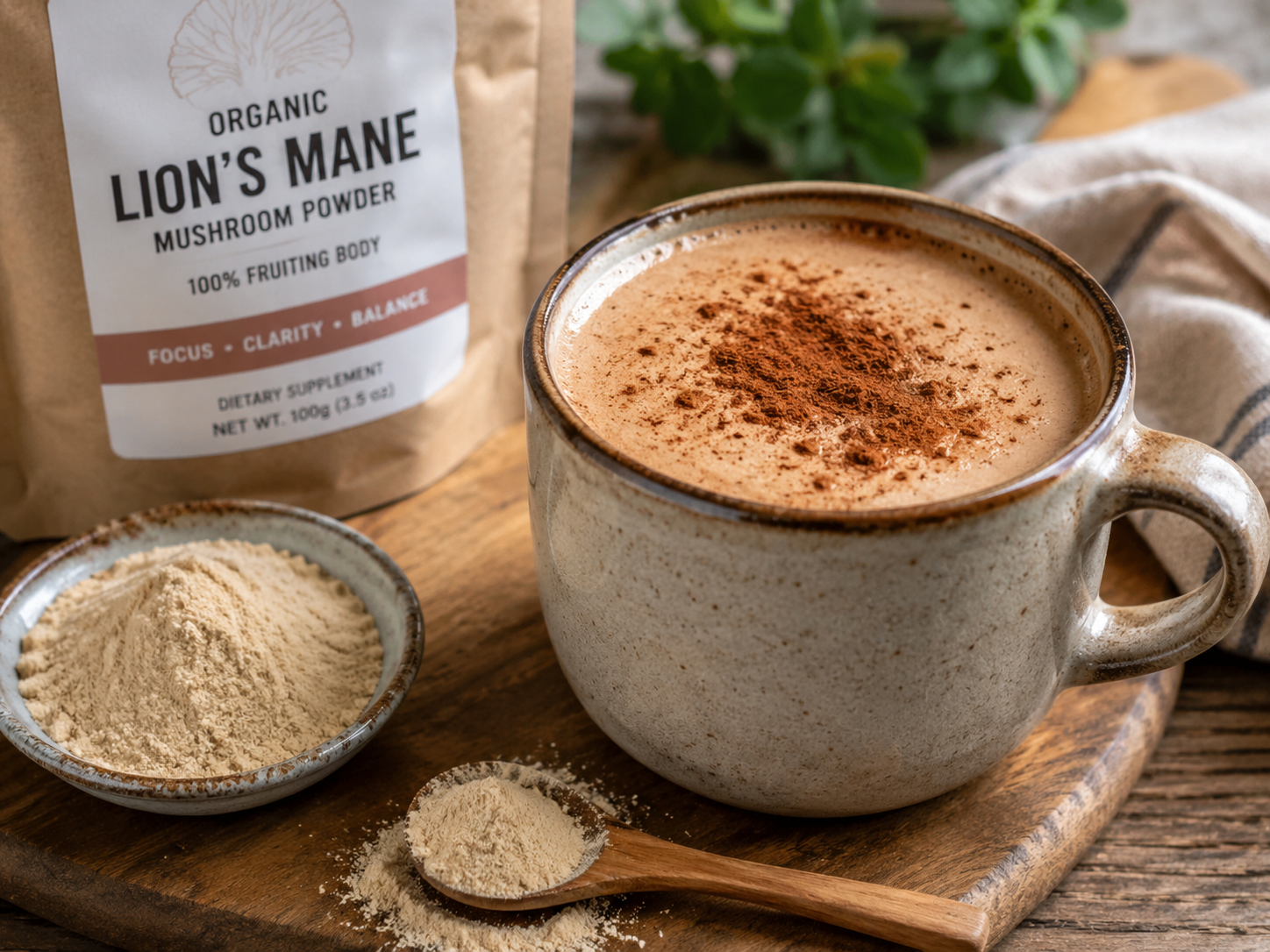
- 1 cup warm milk or plant milk
- 1 serving lion's mane powder
- 1 teaspoon cacao, or ½ teaspoon Ceylon cinnamon
- Raw honey to taste
- Optional vanilla
How: Froth or whisk everything together. The cacao version is richer; the cinnamon version is lighter. Either is an easy way to make lion's mane feel like food instead of a supplement ritual.
8. No-Bake Lion's Mane Energy Bites
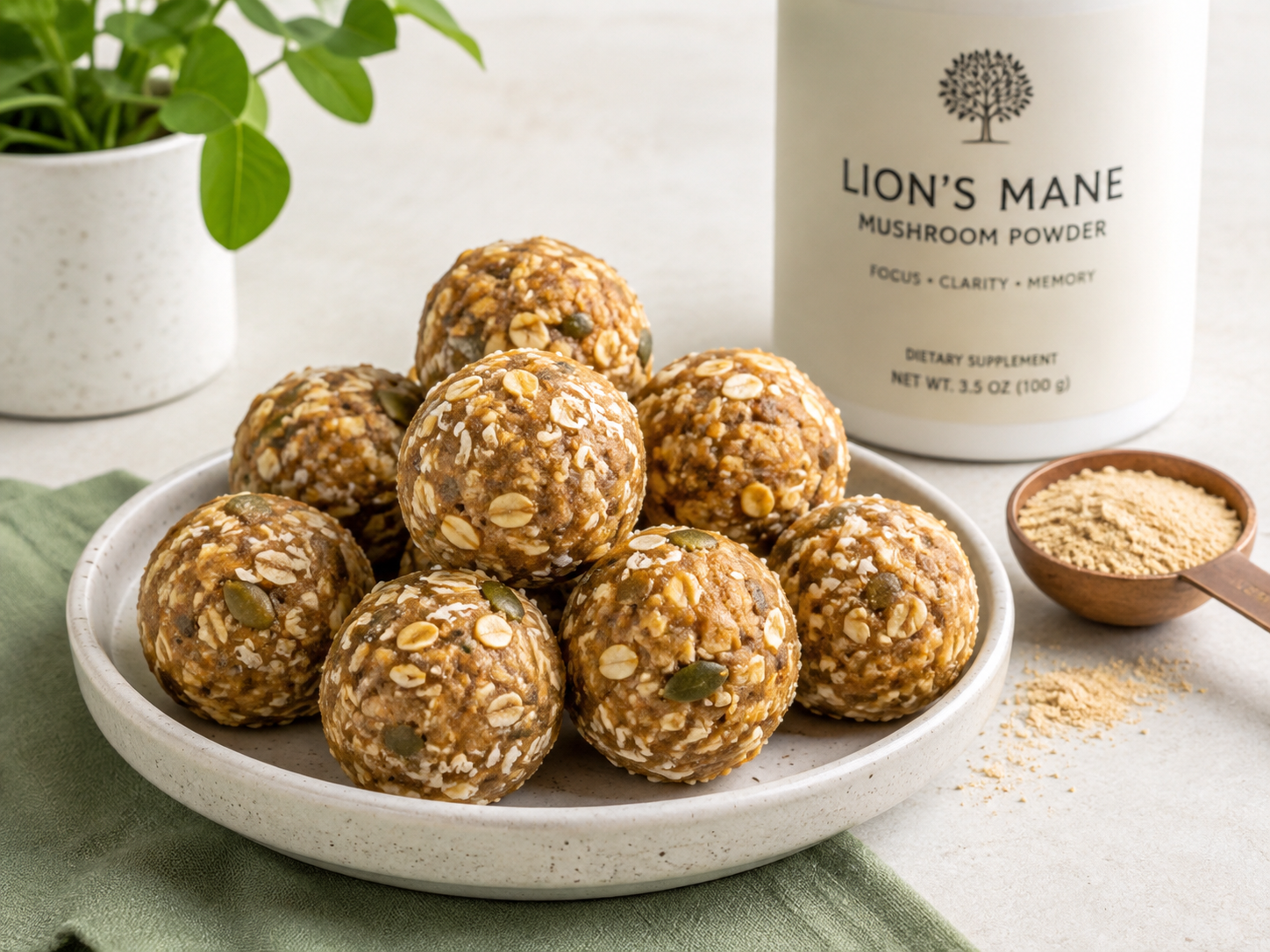
- 1 cup rolled oats
- ½ cup nut or seed butter
- 2 tablespoons raw honey
- ¼ cup hemp seeds
- 2 tablespoons unsweetened coconut
- Cinnamon
- Lion's mane powder divided according to the number of portions you are making
How: Mix, chill for 20 minutes, roll into balls and refrigerate. Portion carefully so you know approximately how much powder is in each serving. These are food, not an excuse to accidentally multiply the supplement dose.
9. Lion's Mane Breakfast Pancakes

There are two ways to do this. You can mix the powder into the batter, or keep the mushroom out of the frying pan and stir it into the yogurt topping instead. I prefer the second method because it makes the dose easier to control.
- Your normal pancake recipe
- Greek yogurt or unsweetened coconut yogurt
- 1 serving lion's mane powder
- Berries
- Raw honey
- Cinnamon
How: Cook the pancakes normally. Mix the lion's mane into the yogurt, spoon it over the warm pancakes and finish with berries, honey and cinnamon.
10. Frozen Berry Lion's Mane Pops
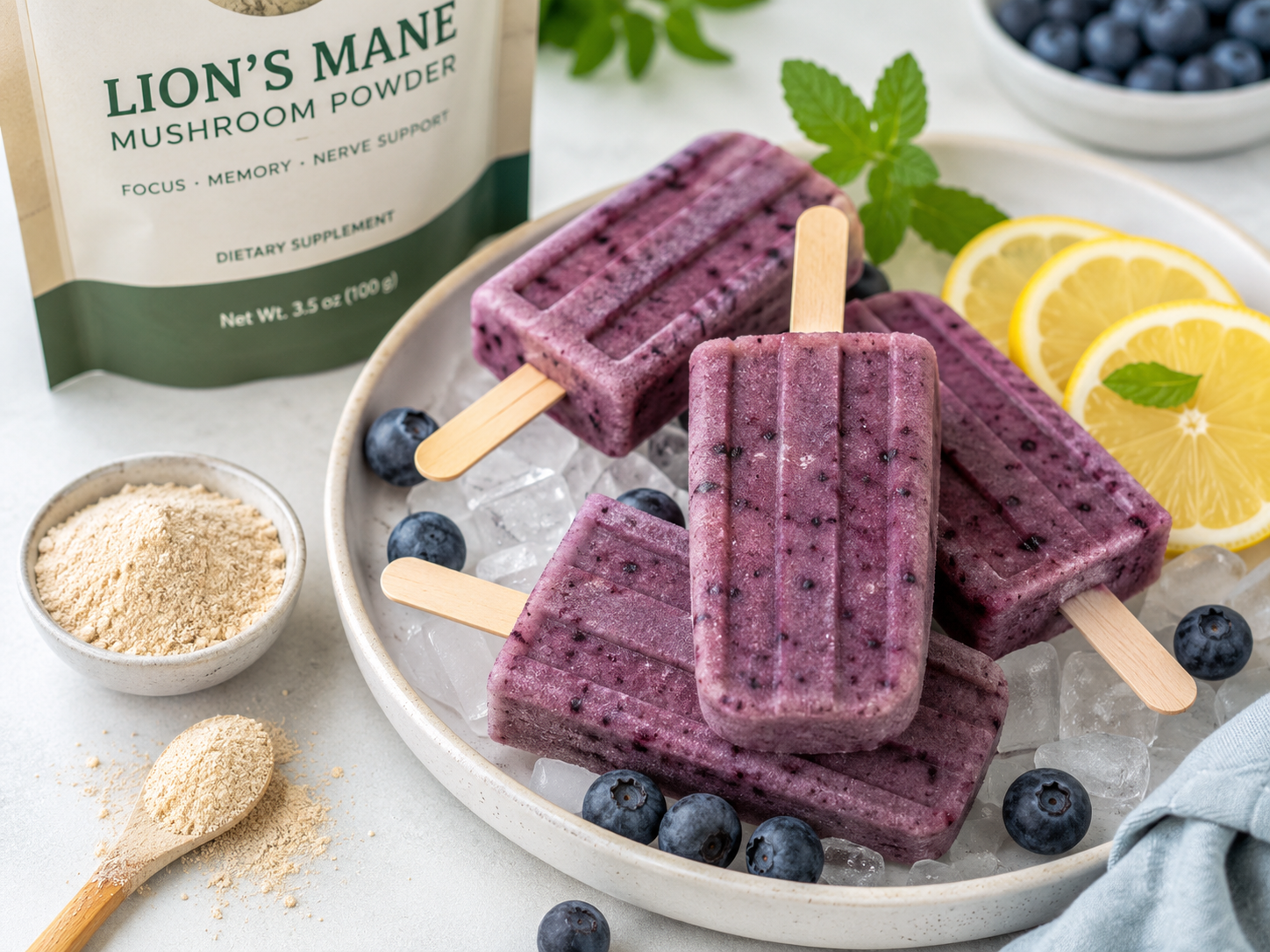
- 1 cup blueberries or mixed berries
- 1 banana
- 1 cup yogurt or coconut milk
- Lion's mane powder divided accurately across the number of pops
- Squeeze of lemon
- Raw honey if needed
How: Blend, divide evenly into moulds and freeze. If you make six pops from three daily servings of powder, for example, each pop contains about half a serving. Label the container so nobody treats them like unlimited ordinary popsicles.
What about the rest of the mushroom family?
Lion's mane is only one functional mushroom. Reishi and chaga come up frequently too, but they are not interchangeable. Lion's mane is the one that attracts the most interest around nerves and cognition. Reishi is traditionally associated more with calm and sleep, while chaga is usually discussed for its antioxidant content and has a specific kidney and oxalate caution.
I wrote a separate evidence-first guide on Self Care Sunday because the subject deserves more room than a recipe article can give it. It looks at lion's mane, reishi and chaga together, including what the human evidence actually supports, what is still speculative, and who should be cautious.
Want the mushroom science rather than the recipes?
Read: Functional Mushrooms Without the Hype: Lion's Mane, Reishi, and Chaga →
That Self Care Sunday article links back here to Food for Back Pain. This page completes the circle with the practical side: exactly how to get lion's mane powder into real food.
A simple rule for buying lion's mane powder
Quality matters. The product used in the Food for Back Pain stack is a fruiting-body extract rather than a powder dominated by myceliated grain. The manufacturer reports third-party verification and more than 30% beta-glucans. That is the type of labeling I would rather see than a dramatic promise on the front of a bag.
The point is not that everyone needs this exact brand forever. The point is to know what you are buying: species identified, clear form, transparent sourcing, sensible serving information and testing where possible.
How much should you use?
Follow the serving instructions on the specific product you own. The Real Mushrooms powder linked here lists 1 gram, approximately ½ teaspoon, daily for adults. More is not automatically better.
If lion's mane is new to you, starting below the full serving for a few days is a reasonable way to see how your digestive system and body respond. If you have a mushroom allergy, do not use it. If you are pregnant, breastfeeding, taking blood-thinning or blood-sugar medication, or managing a significant medical condition, discuss supplemental use with your healthcare professional.
The Food for Back Pain approach
I do not think lion's mane should become another bottle that sits beside the sink until you forget why you bought it.
Put it in breakfast. Stir it into soup. Hide it in pasta sauce. Blend it with berries. Make a warm drink. Choose the food that you already eat often enough that consistency becomes almost automatic.
Frequency over perfection. Food first. One useful layer at a time.
Questions people ask
Can lion's mane powder be heated?
Yes. The extract powder we use is itself made with hot-water extraction. Warm meals and drinks are appropriate. For long, very high-heat cooking, I would add it later when possible simply because there is no advantage to subjecting it to extra heat.
Can I put lion's mane in coffee?
Yes. Coffee, cacao and tea are some of the easiest places to use it because the earthy flavour is masked naturally.
Can I put it in a smoothie?
Yes. A blender is one of the easiest ways to disperse the powder evenly.
Can I refrigerate or freeze food containing lion's mane?
Yes for practical food use. Refrigerated overnight oats and frozen smoothie pops are both workable. Direct research on the stability of every lion's mane compound through household freezing is limited, so I would not make claims stronger than that.
Will lion's mane cure nerve pain?
No. The nerve-growth-factor biology is interesting, but human evidence is still preliminary. It belongs in the category of promising food and supplement research, not proven treatment.
How long before I notice anything?
If you use it, think in weeks rather than hours. The Self Care Sunday mushroom guide goes more deeply into the evidence and why patience and realistic expectations matter.
Sources and further reading
- Self Care Sunday: Functional Mushrooms Without the Hype
- Food for Back Pain: Morning Monster Mash Protocol
- Real Mushrooms Organic Lion's Mane Extract Powder on Amazon
- Real Mushrooms: Lion's Mane extract information
Medical note: This article is educational and is not medical advice. Lion's mane is not a treatment for back pain, nerve injury or neurological disease. Speak with a qualified healthcare professional about supplements if you have a medical condition or take medication.