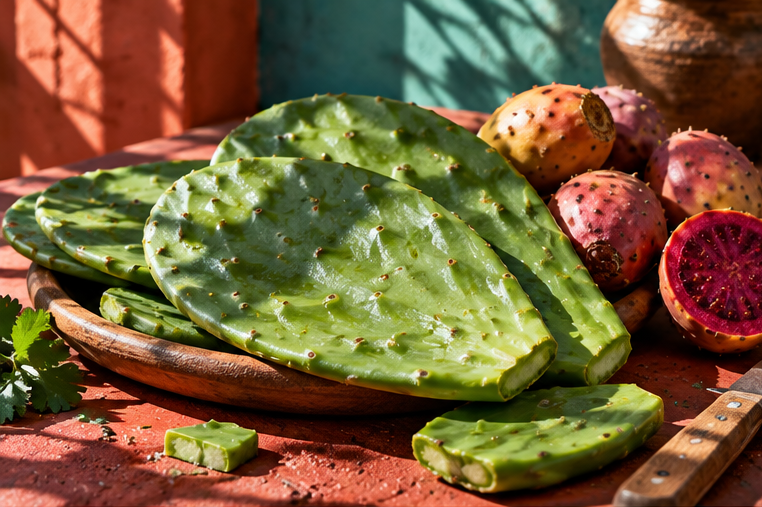
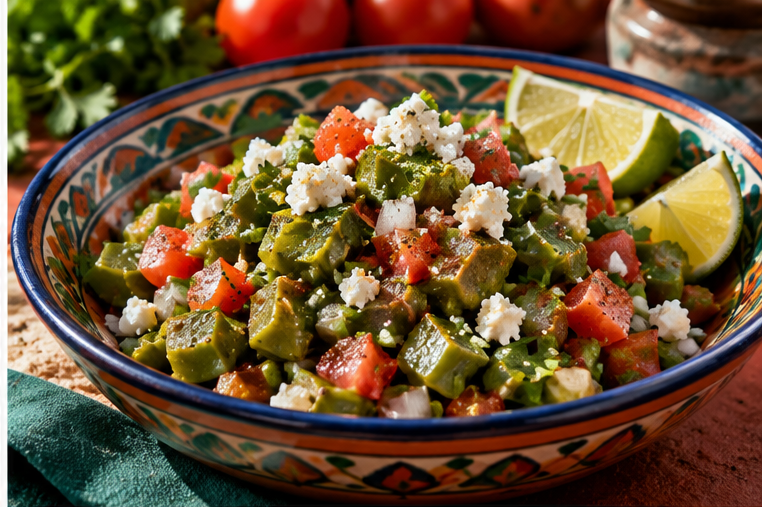
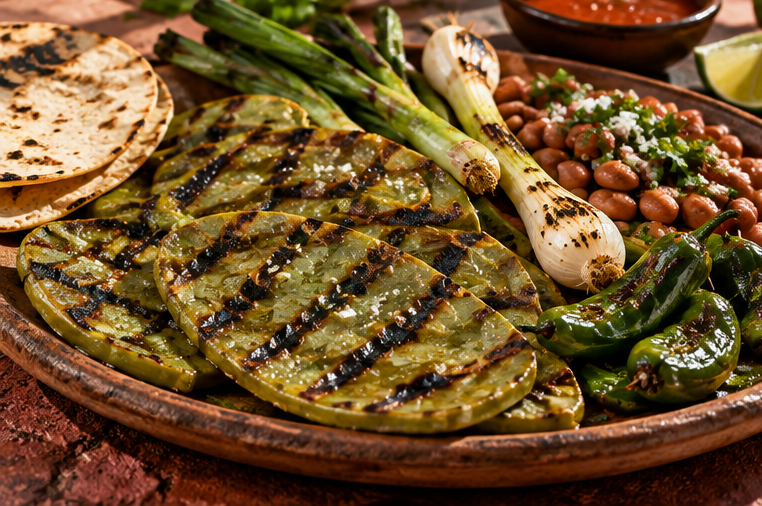
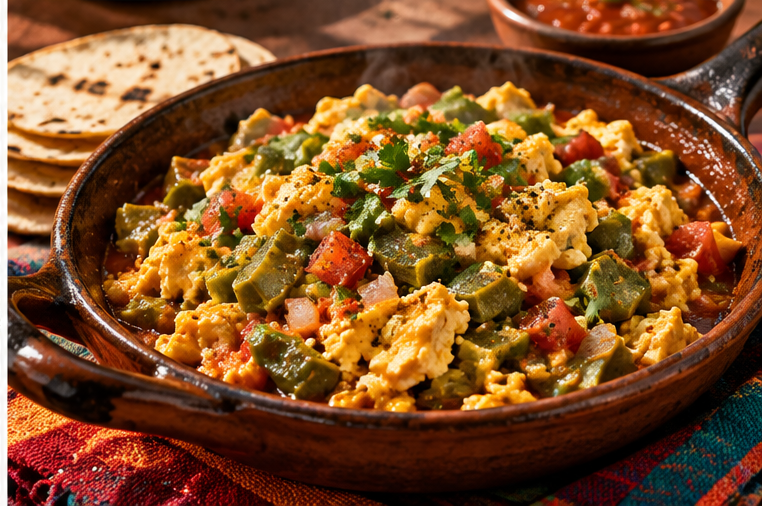
Nopal refers to the edible, flattened young cactus stem, botanically called a cladode, often from Opuntia ficus-indica and related species. Once carefully de-spined, the pads can be sliced into nopalitos for salad, grilled whole, simmered in a stew or folded into eggs.
They taste green and faintly tart, with a texture somewhere between green beans and okra. That texture comes partly from mucilage, the water-holding polysaccharide gel sometimes called baba in Mexican kitchens. It is part of the plant, not evidence of spoilage. [1, 2]
Do not confuse the nopal pad with the fruit, the tuna or prickly pear, which has a different nutritional profile and is eaten separately. Recipes in this issue use the pad.