What the World Is Eating · Issue 06 · November 2, 2026

Nopales.

The cactus Mexico eats.

Before the cactus became a wellness trend, it was breakfast, supper, market food and a national symbol. Meet the green paddles that feed a country.

Food, culture, careful science & three Mexican kitchens
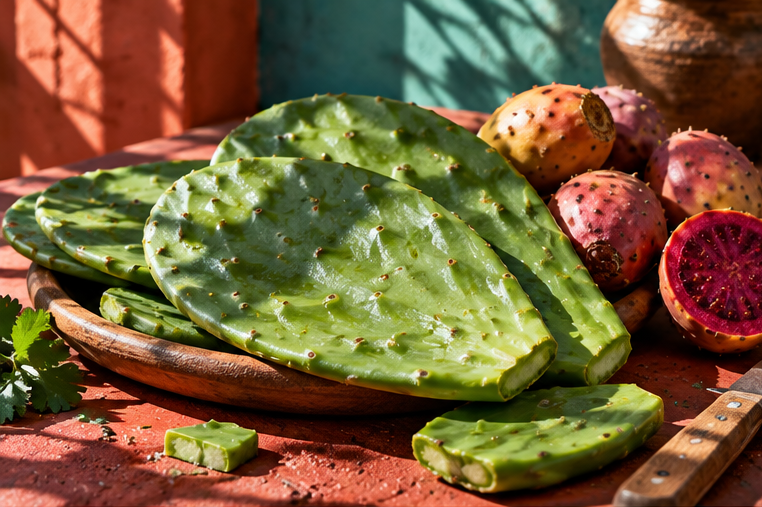
Fresh green nopal cactus pads and ripe prickly pear fruits arranged on terracotta
Fresh, tender cactus paddles are the vegetable, not the fruit.
A vegetable from a cactus

You have probably walked past dinner.

On a market stall, nopales look like broad green paddles. In the kitchen they become something tender, tangy and extraordinarily versatile.

Nopal refers to the edible, flattened young cactus stem, botanically called a cladode, often from Opuntia ficus-indica and related species. Once carefully de-spined, the pads can be sliced into nopalitos for salad, grilled whole, simmered in a stew or folded into eggs.

They taste green and faintly tart, with a texture somewhere between green beans and okra. That texture comes partly from mucilage, the water-holding polysaccharide gel sometimes called baba in Mexican kitchens. It is part of the plant, not evidence of spoilage. [1, 2]

Do not confuse the nopal pad with the fruit, the tuna or prickly pear, which has a different nutritional profile and is eaten separately. Recipes in this issue use the pad.
Edible stemMexico’s food heritageMucilage + fibreThree real kitchens
More than a trend

A plant on the flag. A food on the table.

The nopal is woven into Mexican identity: the national coat of arms depicts an eagle on a cactus, echoing the foundation story of Tenochtitlan. But it is not just a symbol. Tender paddles remain a daily ingredient in markets, household kitchens, fondas and restaurants. [3]

Depending on the region and season, you will find nopalitos tossed with tomato and cheese, cactus paddles blistered on a comal or grill, and chopped nopales simmered with eggs, chiles or beans.

The three-kitchens approach

Three methods, not invented national origins

All three recipes this week belong to Mexican culinary traditions, each highlighting a different kitchen rhythm: the central-Mexican salad table, the grill, and the everyday breakfast skillet. These are practical home adaptations, not claims that one exact version belongs uniquely to one region.

Food culture comes before the supplement label. People have been cooking these paddles long before their fibre reached the research laboratory.

The nutrition notebook

What is inside a nopal?

Fresh nopales are mostly water, naturally low in energy and supply small amounts of fibre, vitamin C and minerals. Their composition varies with species, maturity, environment and cooking; they are not a concentrated source of everything. One peer-reviewed review reports approximately 88–95% water in fresh cladodes. [1]

01 · Water-holding chemistry

Mucilage

Complex plant polysaccharides hold water, giving chopped nopales their characteristic slippery texture. This matrix includes sugars such as arabinose, galactose and xylose. The gel can alter how a food mixture behaves during digestion, but effects depend on the dose and the whole meal. [1, 2]

02 · The two fibre families

Soluble + insoluble

Pectic substances, gums and mucilage contribute to soluble fibre; cellulose and other plant-wall components add insoluble fibre. Fibre supports bowel regularity, and viscous forms may help moderate nutrient absorption. This does not mean a serving cures a metabolic disease. [1, 2]

03 · Compounds, not miracles

Polyphenols

Nopales contain variable amounts of phenolic compounds and flavonoids, among them derivatives of isorhamnetin and quercetin. These show antioxidant activity in laboratory measurements, which cannot be equated with proven relief of inflammation or back pain in people. [1]

04 · Mineral context

Calcium + magnesium

The plant can contribute minerals, including calcium and magnesium, but values depend on growing conditions and preparation. Presence on a nutrient table does not establish how much the body absorbs. [1]

05 · Preparation

The baba question

Boiling, dry-sautéing or grilling changes how much slippery mucilage is noticeable. Some cooks rinse cooked nopalitos to reduce the texture. It is fine to choose a preparation you enjoy; the precise fibre retained after different methods is not fully standardized.

06 · The whole plate

A useful swap

Nopales add vegetable bulk and distinctive flavour to eggs, tacos, beans and salads. The practical value is replacing or accompanying less fibre-rich foods within a balanced meal, not treating nopales as an isolated prescription.

Reading the human evidence

Blood sugar research: interesting, not settled.

A small controlled study published in 2014 enrolled 14 people with type 2 diabetes for meal comparisons including 300 g of steamed nopales. After a high-carbohydrate breakfast, the measured glucose response was lower when nopales were included. This is a short-term, small study, not a demonstration of long-term disease control. [4]

A systematic review of controlled human studies found that cactus cladodes show promise for glucose lowering, but research is heterogeneous and further trials are needed. The review did not find grounds to recommend prickly pear fruit products as a treatment for type 2 diabetes. [5]

What the result does not establish

It does not show that eating nopales will prevent diabetes, substitute for medication, repair spinal discs, reverse arthritis or cure inflammation. Laboratory antioxidant readings do not directly measure the effect of a food on symptoms.

Food for Back Pain perspective: a vegetable that makes satisfying, fibre-containing meals easier to prepare can support dietary quality. Any connection to back comfort is indirect and unproven for nopales specifically.

Medication note: People taking glucose-lowering drugs should discuss major changes in regular nopal consumption with their clinician, particularly if monitoring low blood glucose. Food is not a substitute for prescribed care.

From the Mexican kitchen

Three kitchens. Three plates. One remarkable cactus.

One preparation cool and bright, one smoky from the grill, and one warm from the breakfast pan. All three start with young, completely de-spined nopales. If you are new to this ingredient, buy already cleaned paddles or pre-cut nopalitos from a reputable grocer.

Kitchen 01 · Mexico City & central Mexico

Ensalada de Nopales

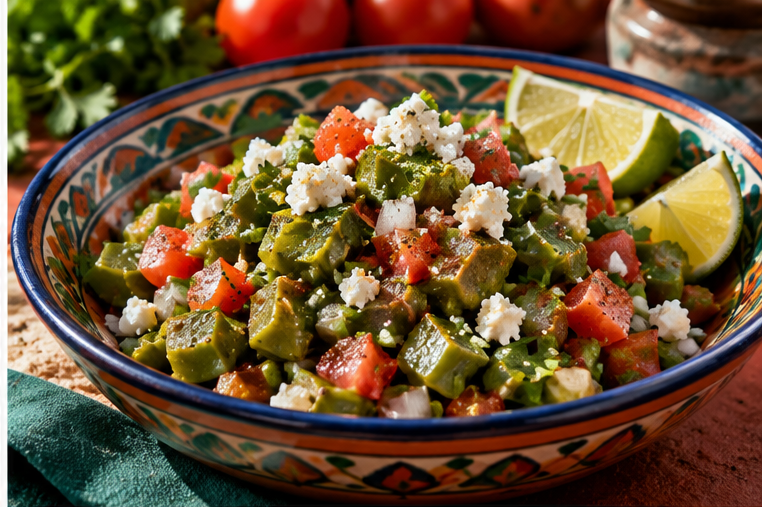
A market-table classic: tender cactus, tomatoes, onion, cilantro and lime, finished with salty queso fresco.

4 side servings25 minutes plus cooling
Mexican nopales salad with tomato, fresh cheese and lime in decorated bowl
Kitchen 01 · Mexico City & central Mexico · Recipe photography

Ingredients

  • 400 g cleaned nopales, diced into 1–2 cm pieces
  • 2 medium tomatoes, diced
  • ¼ small white onion, finely diced
  • ¼ cup chopped fresh cilantro
  • 2 tbsp fresh lime juice
  • 1 tbsp extra-virgin olive oil
  • ½ tsp dried Mexican oregano
  • 60 g queso fresco or panela, crumbled (optional)
  • 1 small serrano pepper, minced (optional)
  • Salt and pepper to taste

Method

  1. Bring a pot of water to a boil. Add diced nopales and simmer 10–15 minutes, until tender but still pleasantly firm. Drain in a colander and rinse briefly, then cool and drain very well.
  2. Toss nopales with tomato, onion, cilantro, lime juice, olive oil, oregano, and serrano if using. Season lightly with salt and pepper.
  3. Let stand 10 minutes so flavours mingle. Top with crumbled cheese just before serving. Enjoy with warm corn tortillas or alongside beans.
Kitchen note: This is a familiar central-Mexican preparation; the lemony finish balances the cactus’s earthy acidity.
Kitchen 02 · Northern Mexican grill

Nopales Asados with Charred Onions & Beans

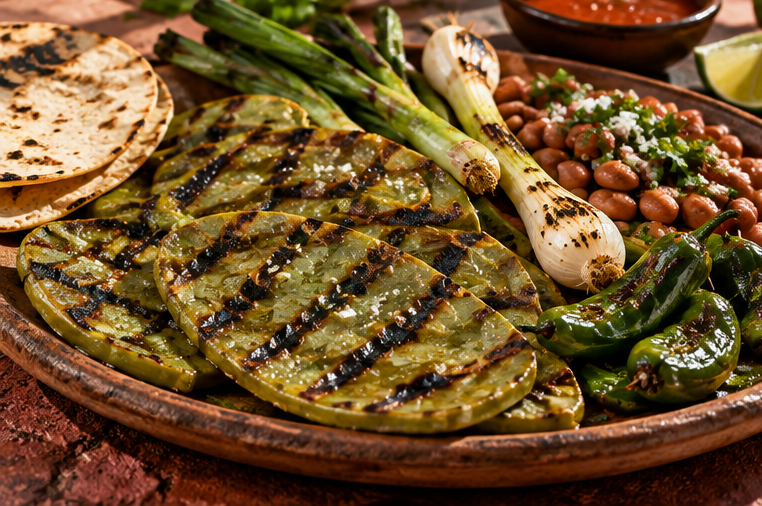
Whole cactus paddles meet hot grill marks, smoky onions, pinto beans and a simple chile-lime finish.

3–4 servings30 minutes
Chargrilled whole cactus paddles with spring onion beans and corn tortillas
Kitchen 02 · Northern Mexican grill · Recipe photography

Ingredients

  • 4 medium cleaned, de-spined young nopales pads
  • 1 bunch spring onions or 1 medium onion, thickly sliced
  • 1 green pepper or 2 mild poblano peppers, halved
  • 1½ tbsp olive oil
  • 1 cup cooked pinto beans, warmed
  • 6–8 corn tortillas
  • 1 lime, cut into wedges
  • ½ tsp ground cumin (optional)
  • 2 tbsp chopped cilantro
  • Salt, salsa roja or salsa verde to serve

Method

  1. Carefully confirm that all cactus spines and tiny glochids have been removed. Wash and thoroughly dry pads; score a shallow criss-cross into each pad without cutting through.
  2. Heat grill or grill pan to medium-high. Brush nopales, onions and peppers with oil, then season with salt and cumin if using. Grill nopales 4–6 minutes per side, until charred in spots and tender; grill onions and peppers until softened.
  3. Slice grilled nopales and peppers into strips. Serve with warm beans and tortillas, fresh cilantro, lime and salsa.
Kitchen note: Pat pads dry for better browning. Grilling is a classic way to highlight the vegetable’s firm texture.
Kitchen 03 · Mexican home breakfast

Nopales con Huevo

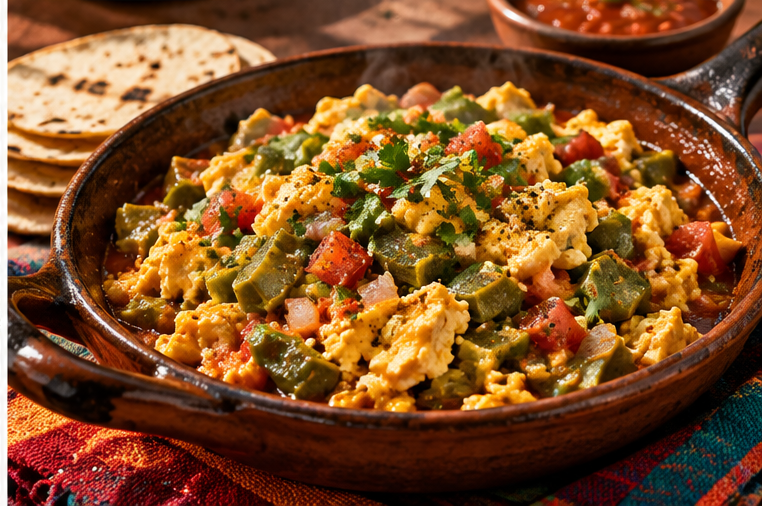
A comforting skillet breakfast of tender cactus, gently scrambled eggs, tomato and onion, served with warm tortillas.

2 hearty servings25 minutes
Mexican home-style scrambled eggs with diced nopales and tomatoes in rustic skillet
Kitchen 03 · Mexican home breakfast · Recipe photography

Ingredients

  • 250 g cleaned nopales, diced
  • 4 large eggs
  • 1 small tomato, diced
  • ¼ white onion, finely chopped
  • 1 small jalapeño, seeded and chopped (optional)
  • 1 tbsp olive oil
  • 2 tbsp water or milk for eggs (optional)
  • 2 tbsp chopped cilantro
  • 4 warm corn tortillas
  • Salt and black pepper; salsa to serve

Method

  1. Simmer the chopped nopales in boiling water for 10–12 minutes until tender. Drain thoroughly and pat dry.
  2. Heat oil in a nonstick skillet over medium heat. Sauté onion and jalapeño for 2 minutes; add the drained nopales and cook 3–4 minutes so excess moisture evaporates. Stir in tomato.
  3. Beat eggs with a pinch of salt, pepper and optional water. Reduce heat to medium-low, pour over vegetables, and stir gently until just set. Scatter cilantro on top and serve with warm tortillas and salsa.
Kitchen note: Cook the nopal first so its moisture does not dilute the eggs. Soft scrambled eggs and bright salsa finish the dish.
Buy it, clean it, cook it

A practical nopal field guide.

Choose the pads

Look for young, relatively thin, firm bright-green paddles. Avoid pads with mushy areas, off odours or extensive damage. Cleaned whole pads and pre-cut nopalitos are particularly convenient.

Handle the spines

Use tongs and gloves if handling uncleaned pads. Tiny hairlike glochids can embed in skin. A vegetable peeler or paring knife can remove the spines and edge; discard all spines and wash the pad before cutting. If uncertain, buy pre-cleaned.

Cook for texture

Simmer cut nopales until tender and drain, or dry-sauté them until their released liquid reduces. Whole pads take well to a hot grill. The taste is mildly tart; tomato, lime, chile, cilantro and cheese provide delicious contrast.

Storage: Refrigerate cleaned fresh nopales promptly, dry and loosely wrapped, and use while firm and fresh. Follow the pack's use-by instructions for prepared products.

Who should be cautious? Ordinary cooked nopales are food, but cactus-based powders, extracts and concentrates are not automatically equivalent to a serving of vegetables. Medical advice matters if you use glucose-lowering medicine or have an individual dietary restriction.

The last forkful

Mexico never needed permission to call cactus dinner.

Nopales are proof that excellent food is often practical before it is fashionable. Clean the pad, pick a pan, and let texture, tradition and flavour do the talking.

More from What the World Is Eating →   Real Food Ideas →