What the World Is Eating · Issue 1

Purslane:
The Weed the World Eats

In one country it gets pulled from cracks in the pavement. In another it goes into dinner. Mexico calls it verdolaga. Turkey calls it semizotu. Greece calls it glistrida. Same plant, completely different reputation.

Mexico · verdolagas Turkey · semizotu Greece · glistrida Plant omega-3 Succulent green
Series idea:
One food. Three kitchens. A new way to eat.
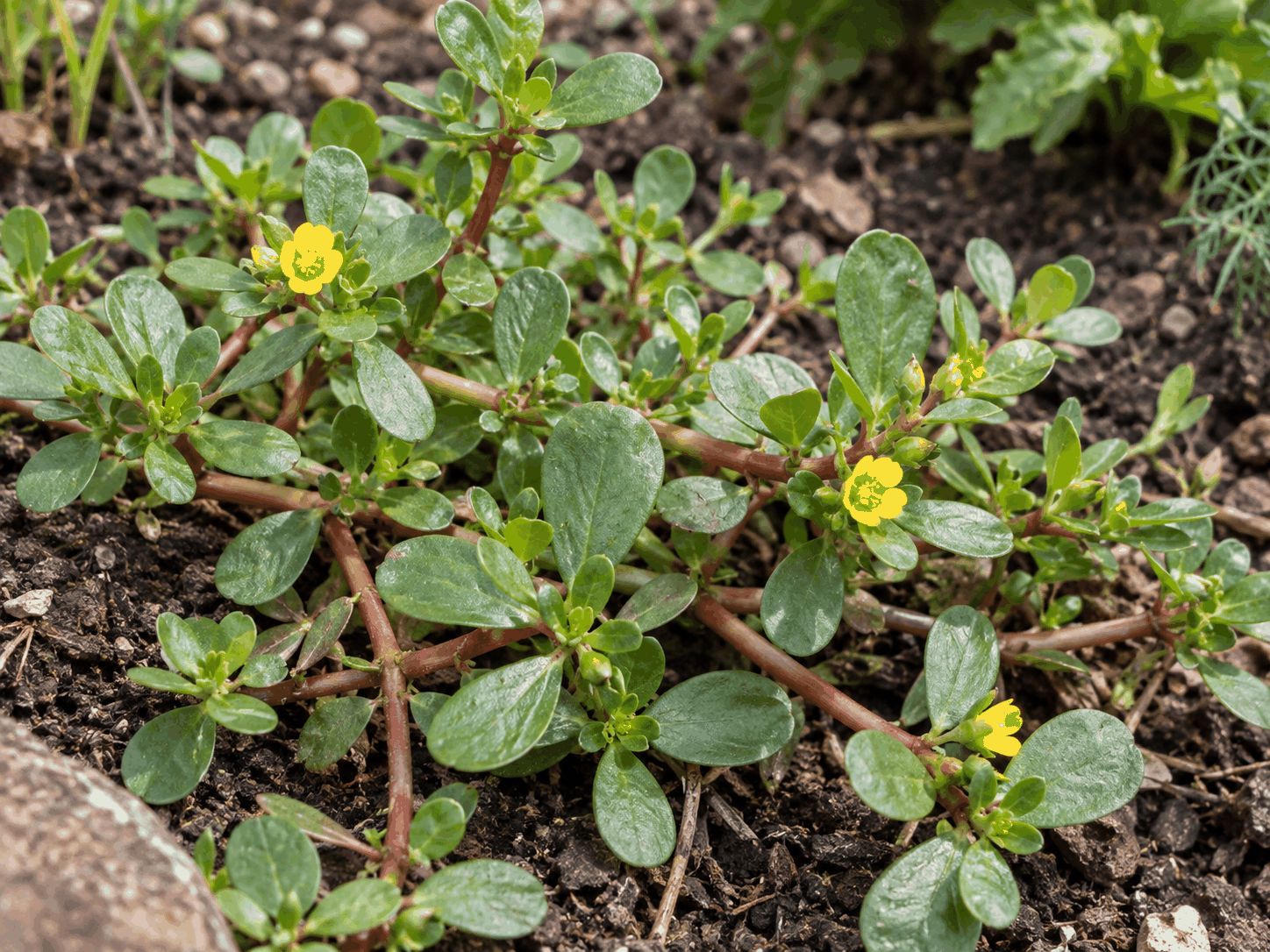
Fresh purslane growing in a garden bed, showing reddish stems, succulent leaves and small yellow flowers.
What purslane looks like: low-growing reddish stems, fleshy oval leaves and small yellow flowers. This is the plant many people pull as a weed and others gather as dinner.

A weed is sometimes just food we forgot to eat.

Purslane, Portulaca oleracea, is a low-growing succulent with fleshy leaves, reddish stems and small yellow flowers. In North America it is commonly classified as a weed. In Mexico it is a cultivated and collected vegetable. In parts of the Mediterranean and Asia, it has been part of everyday food traditions for generations.

Mexico's agriculture ministry describes verdolaga as an edible succulent used in soups, salads and cooked dishes, including preparations with pork or chicken, green chile and tomatillo. Official Mexican agricultural sources also place it among the country's traditional quelites, tender edible greens gathered or cultivated around the milpa.

That difference in attitude is what makes purslane such a perfect beginning for this series. Nothing about the plant changed when it crossed a border. The culture around it did.

“Weed” is an agricultural opinion. “Vegetable” is a culinary one.
The nutrition story

Why this little succulent is unusually interesting

Purslane is mostly water and very low in energy, but it carries a surprisingly dense mix of minerals, vitamin C, carotenoids and polyunsaturated fats for a leafy green. Published reviews report roughly 494 mg of potassium, 68 mg of magnesium and 65 mg of calcium per 100 g fresh weight, although real values vary with cultivar, soil, climate and harvest conditions.

The feature that made purslane famous in nutrition research is its alpha-linolenic acid, or ALA, a plant omega-3 fatty acid. Reviews repeatedly identify purslane as unusually rich in ALA compared with other leafy vegetables. Some analyses have reported around 4 mg of ALA per gram of fresh weight, though composition varies substantially.

~20 kcalper 100 g in Mexican government food data
~92%water, which helps explain the succulent texture
~494 mgpotassium per 100 g reported in a major review
ALAan unusually prominent omega-3 fatty acid for a leafy green
The important omega-3 nuance: Purslane is unusual among greens, but it is still a very low-fat vegetable. A large percentage of its fatty acids can be omega-3 while the absolute amount of total fat remains modest. In other words, purslane is interesting as an omega-3-containing vegetable, but it is not nutritionally equivalent to flax, chia, walnuts or oily fish.

That distinction matters. “Highest percentage of ALA among leafy greens” and “major dietary source of omega-3” are not the same claim. The first can be true without the second being true. Purslane earns attention because it adds ALA in a place we do not normally expect to find much of it: a fresh green vegetable.

The part almost nobody tells you

Purslane can change the way it photosynthesizes.

Purslane is not only nutritionally odd. Its plant physiology is extraordinary.

Under normal well-watered conditions, Portulaca oleracea operates primarily as a C4 plant, a photosynthetic strategy that performs well under heat and bright light. Under drought, purslane can activate CAM-like metabolism, a water-saving strategy more often associated with succulents and desert plants. When water returns, researchers have observed the plant shifting back toward its normal C4 metabolism.

For decades, C4 and CAM photosynthesis were treated as strategies that did not normally coexist in the same plant. Purslane became one of the species that forced plant scientists to rethink that assumption. Modern work still uses Portulaca to study how these two carbon-concentrating systems can operate within the same leaf.

Why that matters in the kitchenIt does not magically make purslane healthier. It explains why this tender-looking green can survive heat and water stress that would destroy many salad plants.
Why that matters globallyA fast-growing edible plant that tolerates difficult conditions is increasingly interesting in conversations about resilient food systems.
One food · Three kitchens

Three cultures that never needed convincing

These are not three trendy chef inventions. They show three very different culinary instincts for the same juicy green.

🇲🇽
Mexico · Verdolagas

Salsa verde, chile and a real dinner

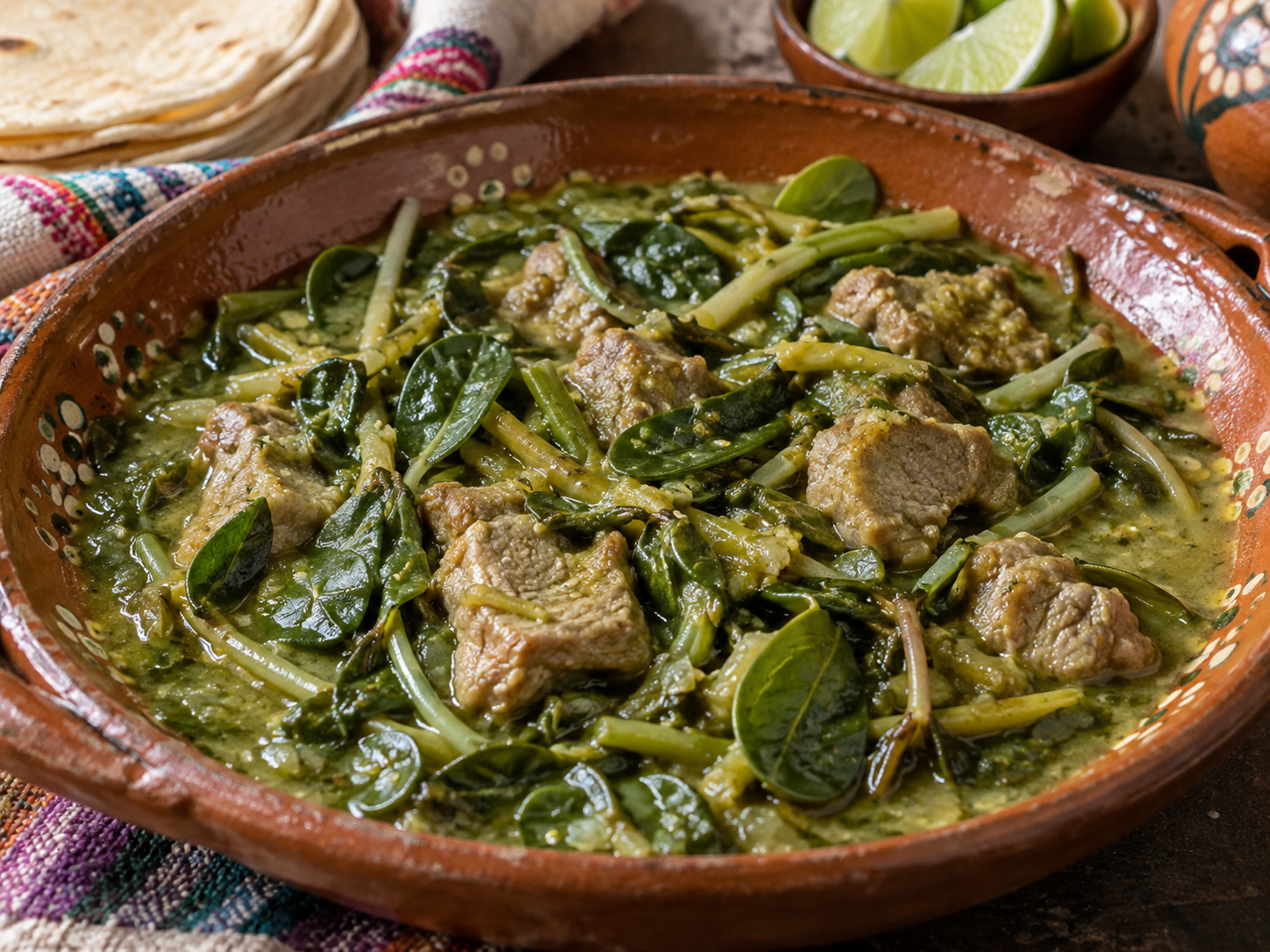
A Mexican-style verdolagas dish with pork simmered in green salsa with purslane.
Mexico: a warm verdolagas preparation with pork, green salsa and tender purslane.

In Mexico, purslane is not treated as a garnish. It becomes part of the meal. The Secretaría de Agricultura describes verdolaga as a traditional edible green, especially important in central Mexico, and notes cooked preparations with pork or chicken, green chile and tomatillo.

That is a very different relationship with the plant than tossing a few leaves over a salad. Cooking softens the stems, the mucilage helps the sauce cling, and the tartness of the plant works naturally with green chile and tomatillo.

Try the idea: pork or chicken + tomatillo salsa + tender verdolagas, simmered until the stems soften but do not disappear.
🇹🇷
Turkey · Semizotu

Cold yogurt, garlic and crunch

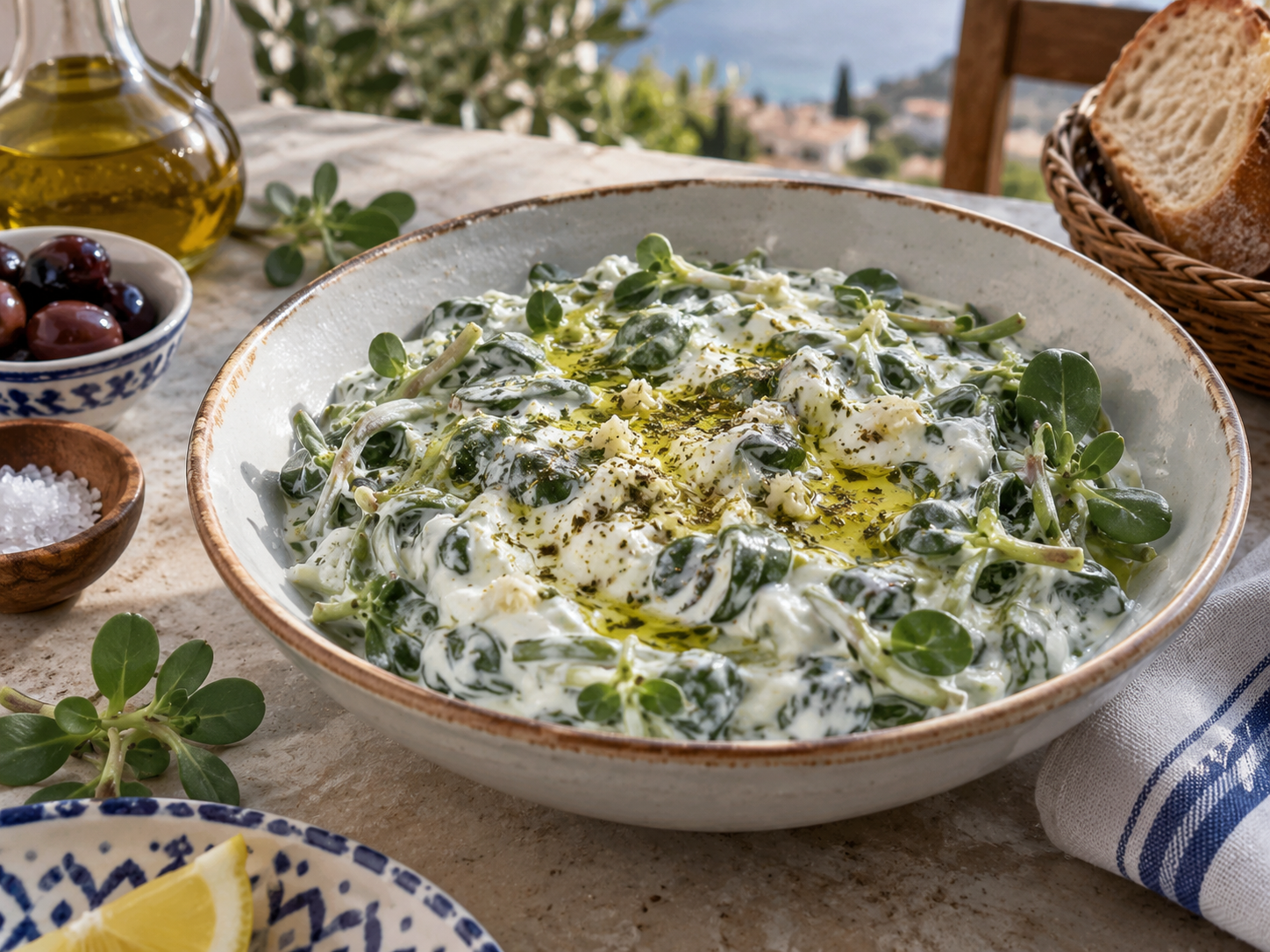
A Turkish-style bowl of purslane folded into thick yogurt with garlic and olive oil.
Turkey: cool, creamy semizotu with yogurt, garlic, olive oil and herbs.

Turkey takes the opposite route. The Turkish Ministry of Culture and Tourism publishes a traditional yoğurtlu semizotu salatası: purslane with yogurt, crushed garlic and salt, served cold. The ministry notes the dish in Mediterranean and Aegean regions, where wild purslane may be used.

It is an almost perfect pairing for the plant. Thick yogurt coats the juicy leaves, garlic gives the dish weight, and the purslane keeps its fresh snap.

Try the idea: roughly chop well-washed purslane and fold it into thick plain yogurt with crushed garlic and a little salt.
🇬🇷
Greece · Glistrida

Wild greens, olive oil and lemon

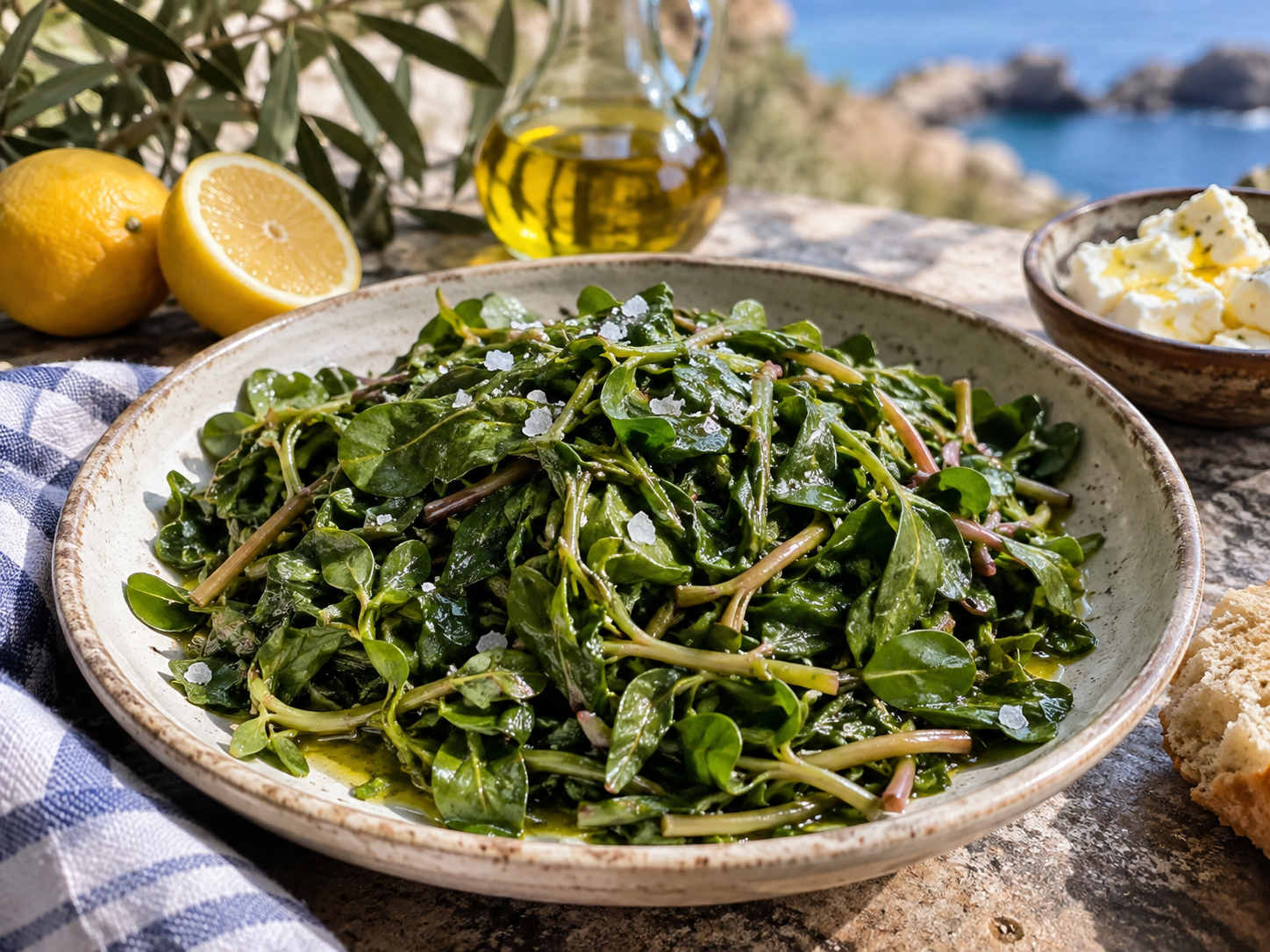
A Greek-style plate of dressed purslane greens with olive oil, lemon and sea salt by the coast.
Greece: glistrida served simply with olive oil, lemon and salt.

In Greece, purslane is known as glistrida and fits into the much larger tradition of horta, edible wild and cultivated greens. Greek food sources describe purslane among the greens that may be boiled and served simply with extra-virgin olive oil, lemon and salt.

This is perhaps the most minimal expression of the three. The point is not to hide the green. It is to soften it, drain it, and dress it while it still tastes like itself.

Try the idea: blanch or boil briefly, drain well, then finish with olive oil, lemon and salt. Serve warm or at room temperature.

There is one nutritional catch: oxalate.

Purslane can contain substantial oxalate, and the amount is highly variable. That does not make it a “bad” food, but it is worth knowing, particularly for people who have been advised to limit dietary oxalate because of calcium-oxalate kidney stones.

Food processing matters. Research on purslane and other vegetables shows that boiling or blanching can reduce soluble oxalate because some of it moves into the cooking water. A 2025 purslane study also found lower total oxalate after blanching and pickling than in fresh samples.

If oxalate is a personal concern, a cooked preparation with the water discarded may make more sense than a giant raw purslane smoothie. This is one reason traditional cooking methods are often more interesting than turning every green plant into juice.

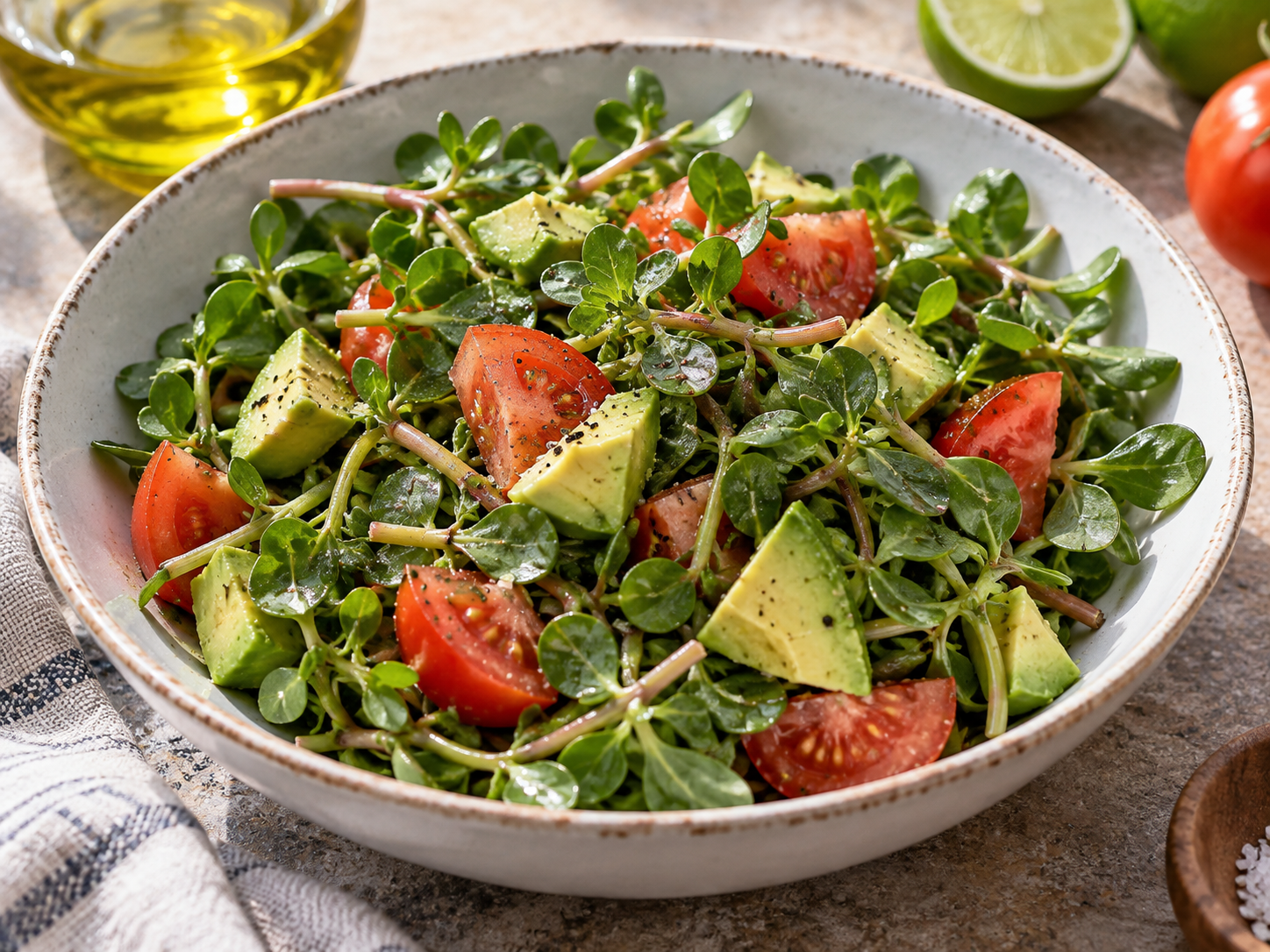
Stephen's easy purslane salad with tomato and avocado in a rustic bowl.
Stephen's easiest version: a simple purslane salad with tomato, avocado, lime, olive oil and sea salt.
Stephen's easiest way to try it

Verdolaga, Tomato & Avocado Salad

Not a claim to be a traditional regional recipe. This is the simple Food for Back Pain version: five ingredients, no cooking, and enough flavor to let you understand what purslane actually tastes like.

  • 2 packed cups tender purslane
  • 2 ripe tomatoes
  • 1 avocado
  • 1 fresh lime
  • Extra-virgin olive oil + sea salt

Make it

Wash the purslane thoroughly. Keep the tender leaves and thin stems. Discard tough lower stems.
Cut the tomato and avocado into generous pieces rather than tiny dice.
Toss with purslane, fresh lime juice, a little olive oil and sea salt.
Eat it immediately while the purslane is still cold, juicy and crisp.
What to notice The purslane is not pretending to be lettuce. It is thicker, juicier and faintly tart. That texture is the whole point.

Why it belongs on Food for Back Pain

Not because purslane “treats back pain.” That would be a silly leap.

It belongs here because Food for Back Pain has always been about building a better food environment around the body: real food, useful fats, minerals, plant compounds, protein and connective-tissue support without pretending any single ingredient is magic.

Purslane is a perfect example of how much good food sits outside the narrow rotation most of us eat. It is inexpensive, culturally established, nutritionally unusual, climate-resilient and genuinely pleasant once you know what to do with it.

The most interesting nutrition lesson here may not be “eat purslane.” It may be this: somewhere else in the world, somebody already knows what to do with the food you are ignoring.

Next in What the World Is Eating

Sardines

Portugal. Spain. Japan. The humble little fish that somehow became both peasant food and restaurant food.