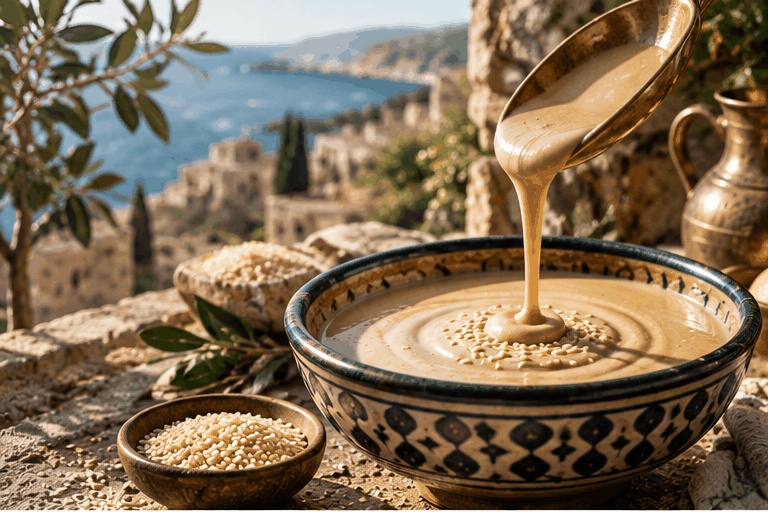
Tahini being poured into a patterned bowl in a sunlit Mediterranean coastal setting.
What the World Is Eating · Issue 4

TAHINI

The seed paste at the center of the table.

Sesame is one of humanity's oldest oilseed crops. Grind the seeds into a paste and suddenly the same ingredient can become a hummus essential, breakfast spread, sauce, sweet or dressing.

Levant · Türkiye · Greece
One ingredient · many lives

A world of tahini

Tahini is simply ground sesame, but simple ingredients often travel the farthest.

Sesame has been cultivated for thousands of years, with archaeological and written evidence placing it among the oldest oilseed crops. Tahini is one expression of that much older sesame story: seeds ground until their oil and solids become a creamy paste.

On its own, good tahini tastes nutty, slightly bitter and almost buttery. Add lemon and water and it transforms into a pale, pourable sauce. Stir it into chickpeas and you get one of the foundations of hummus. Add grape molasses and it becomes breakfast in Türkiye. Turn it into halva and the same sesame paste becomes dessert.

What it isGround sesame seed paste.
What it isn'tJust “the stuff in hummus.”
Best trickWater makes it seize first, then turn creamy.
One food · three kitchens

Same sesame. Very different tables.

These are not the only places tahini belongs, but they show how dramatically one paste can change when culture gives it a different job.

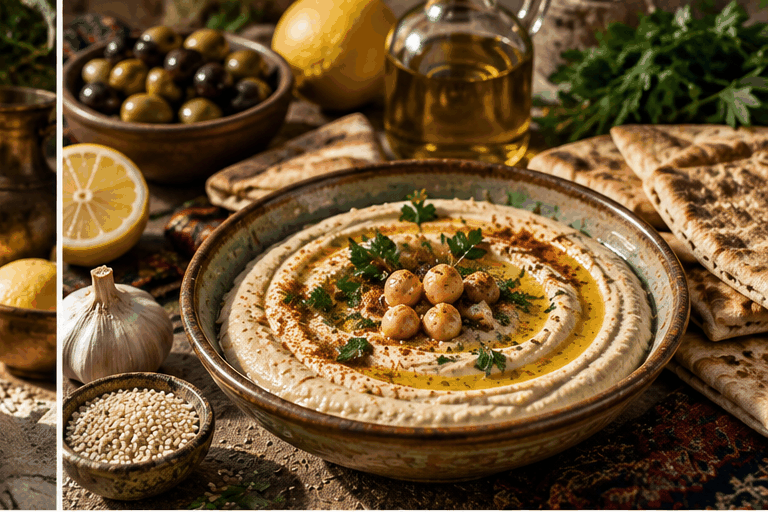
Hummus with tahini, chickpeas, olive oil, herbs and pita.
The Levant

Hummus & sauces

Across the Levant, tahini is woven into hummus, lemony sauces and mezze. Lebanon Traveler describes hummus bi tahini as the classic Lebanese version: chickpeas, tahini, lemon, garlic and olive oil. The paste is doing more than adding fat. It gives hummus its sesame depth, creamy body and slightly bitter edge.

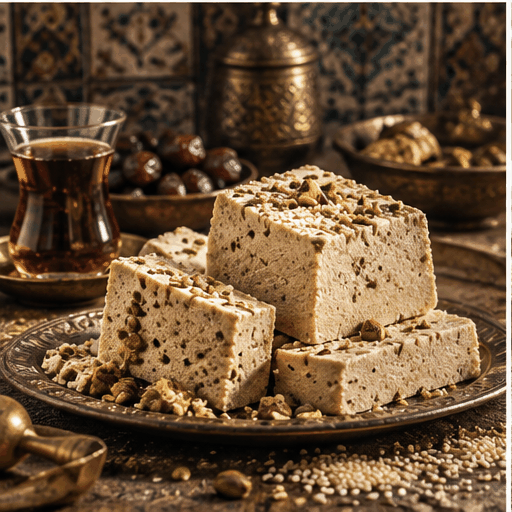
Pistachio-studded sesame halva served with Turkish tea.
Türkiye

Breakfast & helva

In Türkiye, tahini moves easily between breakfast and sweets. GoTürkiye lists tahin-pekmez, tahini mixed with grape molasses, among the small dishes of a traditional Turkish breakfast. Tahini also becomes tahin helvası, the dense, crumbly sesame sweet found across the country.

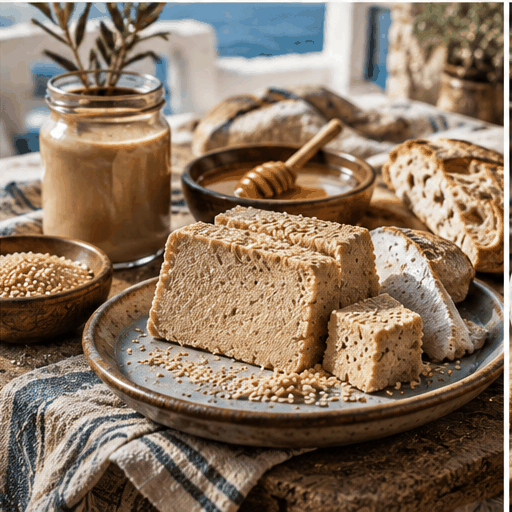
Tahini halva, bread, honey and sesame on a bright Aegean-style table.
Greece

Halva & fasting foods

Greek food gives tahini a strong place in sweets and fasting traditions. Visit Greece describes tahini halva as closely tied to Lent and also points to tahini pies and other sesame-based sweets. In everyday life, tahini can be as simple as a spread on bread, sometimes alongside honey.

Small seeds can carry a surprising amount of food.

Tahini is concentrated. That is the feature, not a flaw. A spoonful brings fat, protein, minerals and sesame's characteristic lignans in a very small package.

Nutrition without the mythology

What is actually in a spoonful?

EnergyUSDA legacy data for raw stone-ground kernel tahini gives about 86 calories per tablespoon.
ProteinAbout 2.7 g per tablespoon in that same USDA entry.
CalciumAbout 63 mg per tablespoon in that entry, but calcium varies substantially with whether the hull is retained.
MagnesiumAbout 14 mg per tablespoon in the USDA raw stone-ground kernel entry.
Sesame lignansSesamin and sesamolin are characteristic sesame compounds studied for their chemistry and biological activity.
FatTahini is energy-dense because sesame is an oilseed. A little goes a long way in sauces and dressings.

Numbers vary by brand, processing and whether the paste is made from hulled kernels or more intact sesame seed. Treat label values as the better guide for the jar you actually buy.
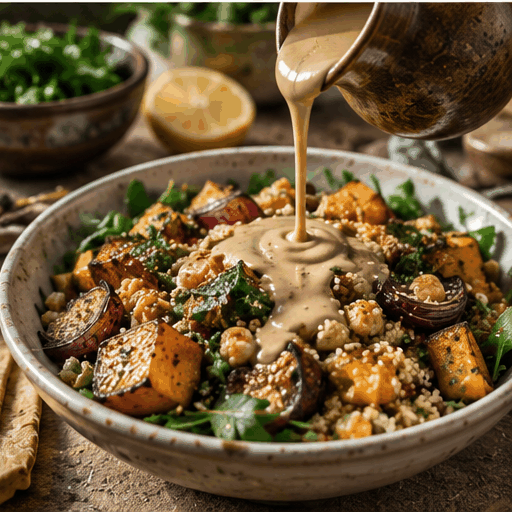
A roasted vegetable and grain bowl finished with a generous tahini drizzle.
Stephen's easy version

Simple Tahini Lemon Dressing

One of tahini's best tricks is that it looks broken before it turns silky. Lemon and a little water make it tighten at first. Keep stirring and adding water, and suddenly it becomes a creamy sauce.

What you need

  • ¼ cup tahini
  • Juice of 1 lemon
  • 1 small garlic clove, finely grated
  • 3 to 6 tablespoons cold water
  • ½ teaspoon sea salt
  • Optional: cumin, parsley, dill or a drizzle of olive oil

How to make it

  1. Stir the tahini, lemon, garlic and salt together. It will thicken dramatically.
  2. Add cold water one tablespoon at a time, stirring hard after each addition.
  3. Stop when it becomes pale, smooth and pourable.
  4. Taste. Add more lemon, salt or herbs if you want it brighter.
Use it on almost anything: roasted vegetables, lentils, chickpeas, grain bowls, chicken, fish, greens, potatoes or as a dip for raw vegetables.
!

Important: sesame is a major food allergen. In the United States it became the ninth legally recognized major allergen in 2023. Anyone with sesame allergy should avoid tahini and read labels carefully.

Sources & deeper reading

Where this article comes from

  1. Current Research Trends and Prospects for Yield and Quality Improvement in Sesame — sesame as an ancient oilseed crop.
  2. Exotic foods reveal contact between South Asia and the Near East during the second millennium BCE — archaeological evidence for sesame in the Levant.
  3. Lebanon Traveler: More than a Dip — Hummus — hummus bi tahini in Lebanese food culture.
  4. GoTürkiye: Turkish Breakfast — tahin-pekmez on the breakfast table.
  5. GoTürkiye: Turkish Desserts — tahin helvası.
  6. Visit Greece: Culinary Traditions of Lent — tahini halva and tahini-based sweets.
  7. USDA National Nutrient Database SR28 — raw, stone-ground sesame butter/tahini nutrient data.
  8. USDA MyPlate: Protein Foods — tahini listed among nuts, seeds and soy protein foods.
  9. Lignans of Sesame: A Comprehensive Review — sesamin, sesamolin and related compounds.
  10. U.S. FDA: Sesame Is the Ninth Major Food Allergen.

Real food gets more interesting when the world cooks it.

One sesame paste. Hummus, breakfast, halva, sauces and a dressing that takes five minutes.