Protein quality
Teff supplies plant protein with a useful range of essential amino acids. It is not nutritionally equivalent to eggs or fish gram for gram; eating it with lentils, yogurt or other protein-rich foods creates a fuller meal. [1,2]
Ethiopia's ancient grain with a modern story.
One of the smallest grains on earth became the foundation of a shared table. Inside the science, the fermentation, and three remarkable ways to eat it.
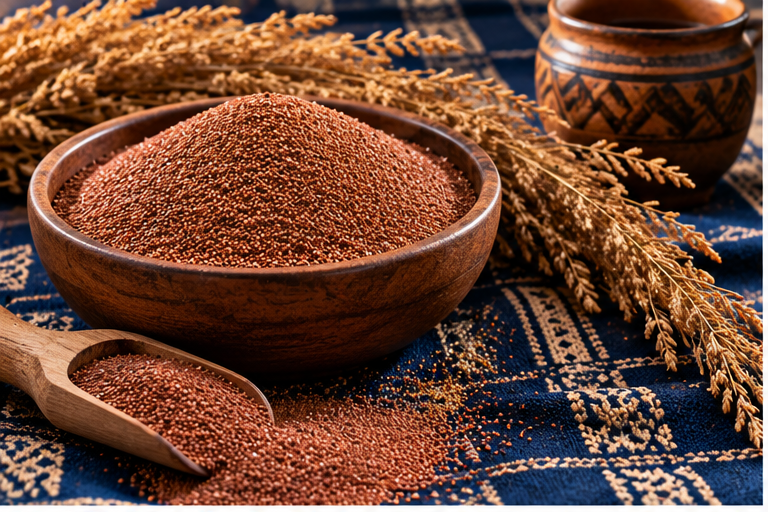
Teff is not an invented superfood. It is a cereal central to the daily cooking and agricultural heritage of Ethiopia and Eritrea.
Teff (Eragrostis tef) is a tiny-seeded grass in the same broad family as rice, wheat and oats. Unlike quinoa and buckwheat, it is a true cereal grain. Its tiny seeds range from pale ivory to reddish brown. The taste of dark teff is earthy, lightly nutty and sometimes reminiscent of malt or cocoa. [1,2]
Teff is so small that separating its bran and germ is impractical. Commercial teff flour is commonly whole grain, which helps retain fibre and minerals. But a grain's nutrient label is not the same thing as what the body absorbs. [1,2]
Its best-known food is injera, the tangy, flexible, porous flatbread on which meals are served and with which meals are eaten. Injera is not merely a side dish. It is plate, utensil, texture and social ritual at once.
In Ethiopian homes and restaurants, a broad disk of injera supports lentils, greens and aromatic vegetable or meat stews. Pieces torn from the bread gather the food. The pleasant sourness comes from fermentation and balances intensely seasoned dishes.
Across Eritrea, related fermented flatbreads, often called taita, serve alongside rich lentil and vegetable dishes. Ingredients and methods vary across families, regions and access to grains; some flatbreads blend teff with sorghum, wheat or other flours. It would be misleading to claim every Ethiopian or Eritrean household uses an identical recipe.
In modern North American and European kitchens, teff also moves beyond flatbread into porridge, pancakes and loaves. That is a new application, not a replacement for its roots.
Teff is useful because it is a whole grain with complex carbohydrates, fibre, protein and minerals. There is no credible evidence that eating teff alone reverses back pain, repairs discs or treats diabetes. [1–4]
Teff supplies plant protein with a useful range of essential amino acids. It is not nutritionally equivalent to eggs or fish gram for gram; eating it with lentils, yogurt or other protein-rich foods creates a fuller meal. [1,2]
Some older reports gave astonishingly high iron figures. Research found that soil contamination can strongly inflate measured iron in teff-based injera. Mineral absorption also depends on phytate and meal composition. Avoid treating the highest published value as guaranteed nutrition. [2–4]
Teff often supplies more calcium than many common dry cereal grains and also contains magnesium. Exact levels vary with cultivar, soil, flour and serving size. Dietary calcium still comes from the whole day's intake. [1,2]
Whole-ground teff retains grain components that refined starch-based gluten-free products often lose. Fibre influences fullness and bowel function, but the amount depends on the actual recipe and serving. [1]
Teff's starch properties have generated interest in glycaemic response, but proof of a particular blood-sugar benefit in humans is limited. Grinding, cooking, fermentation, portion size and accompanying foods all matter. [2]
Teff itself does not contain wheat, barley or rye gluten. People with coeliac disease should still choose certified gluten-free teff where available because handling and milling can introduce cross-contact. [1]
Traditional fermentation is both flavour-making and food technology: microbes acidify the batter, shaping the crumb and the characteristic tang.
During fermentation, lactic-acid bacteria and yeasts can change starch, acidity and some mineral-binding compounds. But an attractive laboratory mechanism does not automatically mean that iron absorption meaningfully rises in a person eating the food. [3,4]
In one household study, phytate declined after 48 hours, yet estimated iron bioavailability remained constrained. A separate analysis of Ethiopian injera found that much of the measured iron could come from contaminating soil, not the grain itself. [3,4]
Four excellent ingredients, four different strengths. This comparison is based on typical whole, dry forms, not cooked weights or processed cereal products. Cooking changes water content dramatically. [1,2,5]
| Question | Teff | Oats | Quinoa | Buckwheat |
|---|---|---|---|---|
| Botanical identity | True cereal grain | True cereal grain | Pseudocereal seed | Pseudocereal seed |
| Gluten | Naturally gluten-free; watch cross-contact | Pure oats lack gluten but often have cross-contact; avenin tolerance can vary | Naturally gluten-free | Naturally gluten-free |
| Distinctive strength | Whole-ground flour and notable mineral potential | Beta-glucan soluble fibre | Useful protein quality and versatile whole seed | Rutin-containing varieties and versatile groats |
| Typical kitchen role | Injera, porridge, baking | Porridge, overnight oats, baking | Salads, bowls, pilafs | Kasha, soba, galettes |
| Key caveat | Iron figures and absorption need scrutiny | Check gluten-free status for coeliac diets | Rinse if needed to remove bitter saponins | Soba may contain wheat; read labels |
USDA FoodData Central is the best place to compare specific forms by weight, but values differ by database entry and processing. We deliberately avoid declaring an absolute “winner” from unmatched nutrient listings.
Keep oats for everyday breakfast, quinoa for a quick whole-seed side, buckwheat for flavour and versatility, and teff for earthy whole-grain baking and fermented flatbread. The smart move is rotating them, not searching for one miraculous grain.
The first two recipes reflect closely related Ethiopian and Eritrean food traditions, presented as achievable home adaptations. The third takes the grain into a contemporary loaf. Each includes an ingredient list, method and its own photograph.
A soft, tangy flatbread with the signature tiny eyes. Serve it with lentils, vegetables or stews.
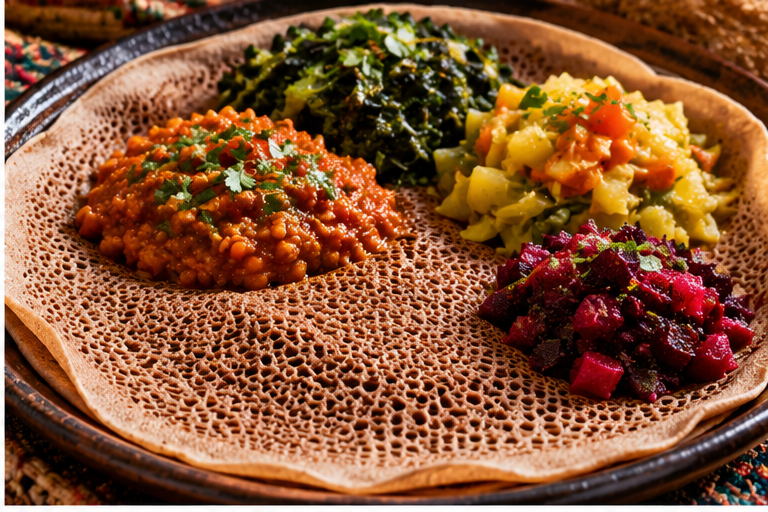
Eritrean-inspired teff flatbread with a warmly spiced red-lentil and vegetable stew.
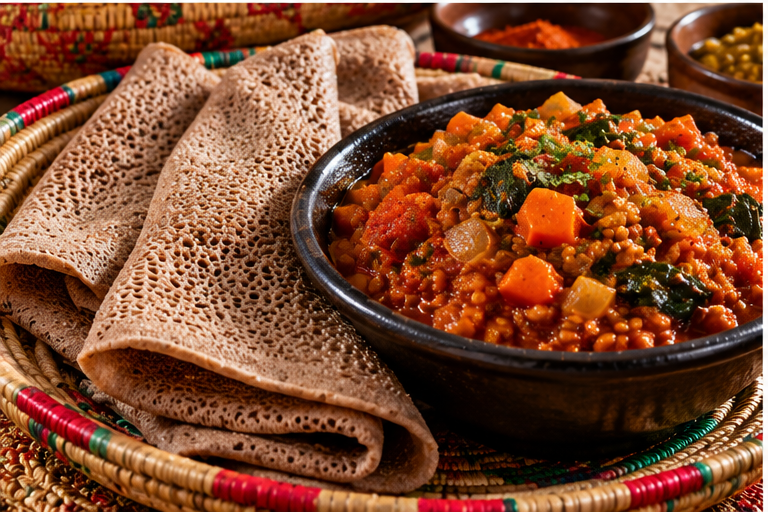
A dense, nutty loaf that treats teff as a real grain rather than a wellness garnish.
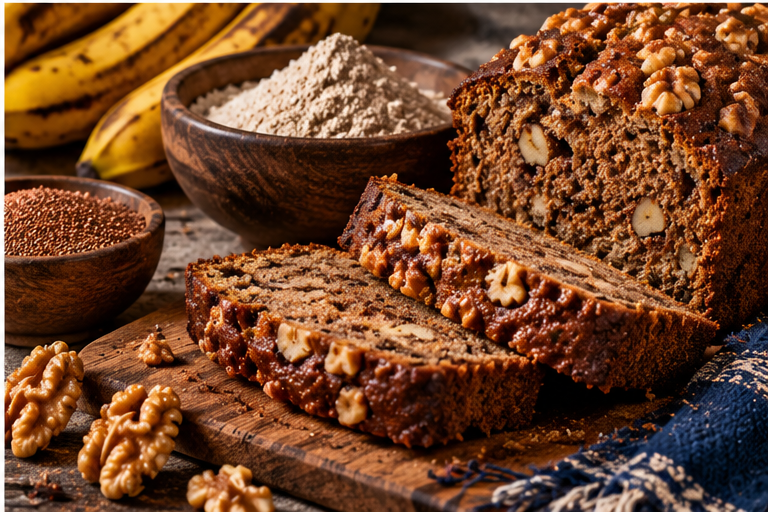
Buy teff flour for injera and baking, whole teff grain for cooked porridge. Because the grains are tiny, rinse through a very fine sieve if the package calls for it.
Whole-grain flour contains oils from the bran and germ. Keep well sealed in a cool, dry place and refrigerate or freeze for longer storage, especially if buying in bulk.
Teff's bold flavour can be new. Add it gradually to porridge, try the breakfast loaf, or begin with a prepared injera meal before starting your own fermented batter.
Teff is most interesting when it stays connected to the people who have grown and cooked it for generations. Start with injera, explore a new loaf, and let sound nutrition follow good food.