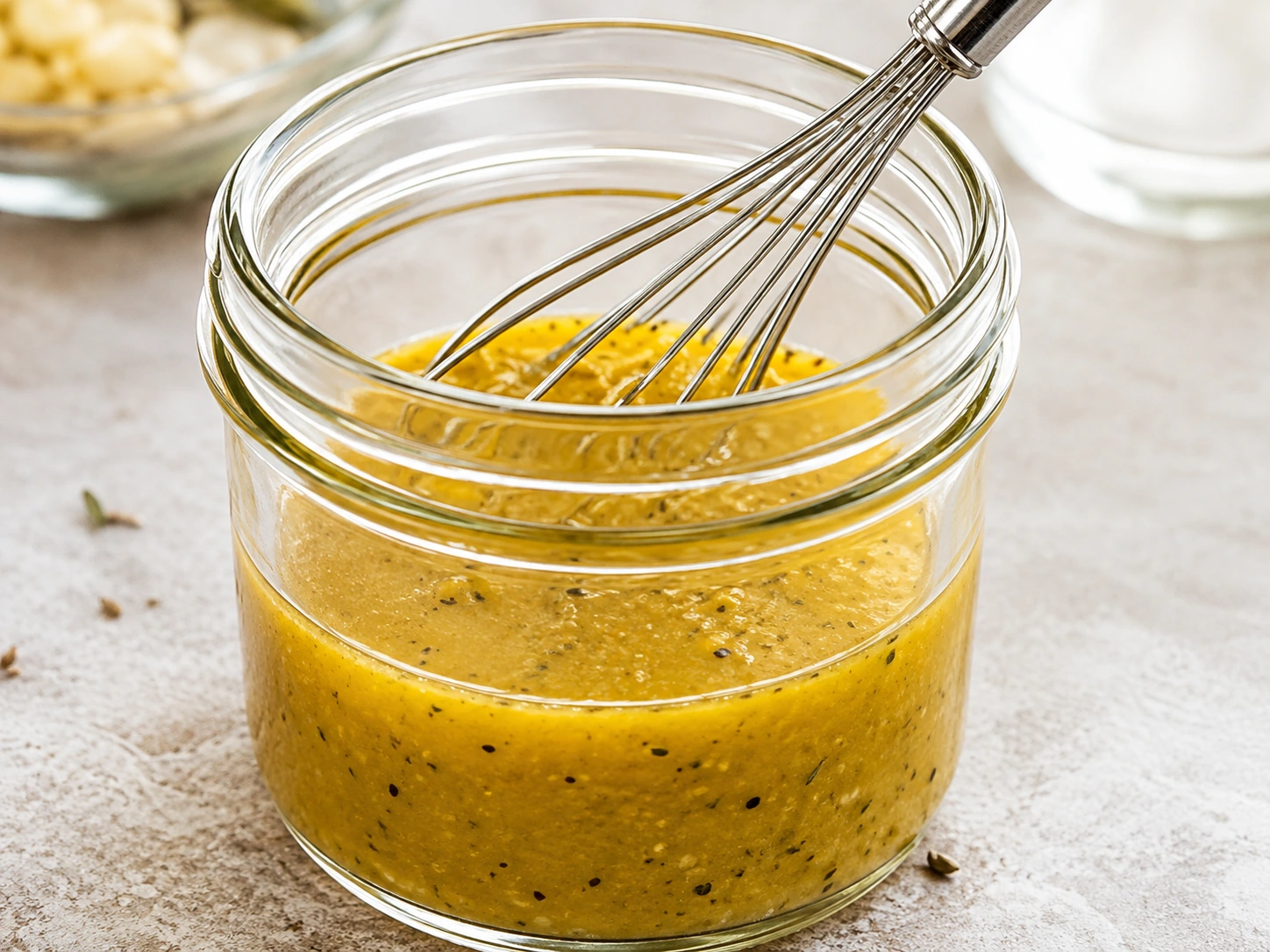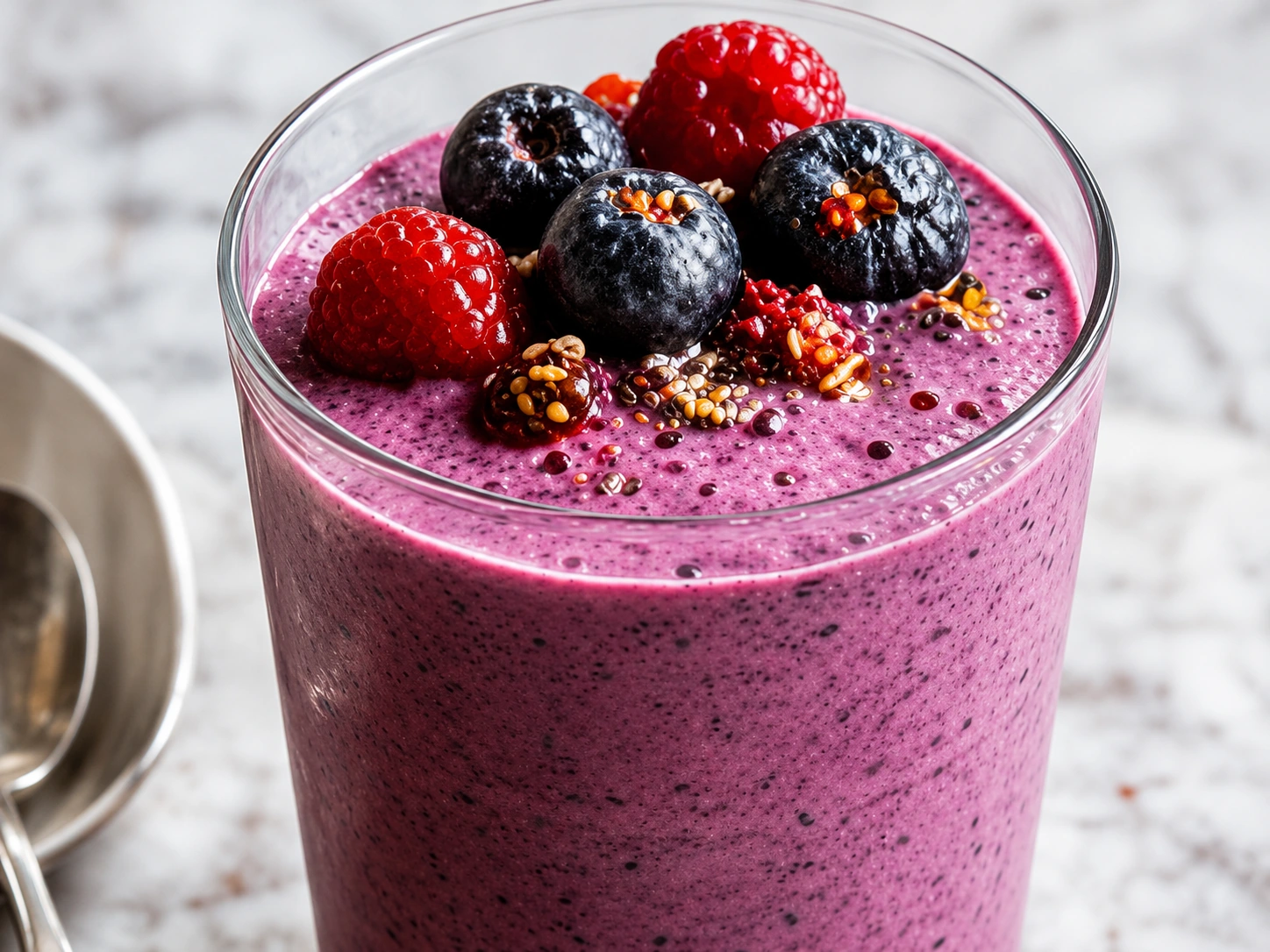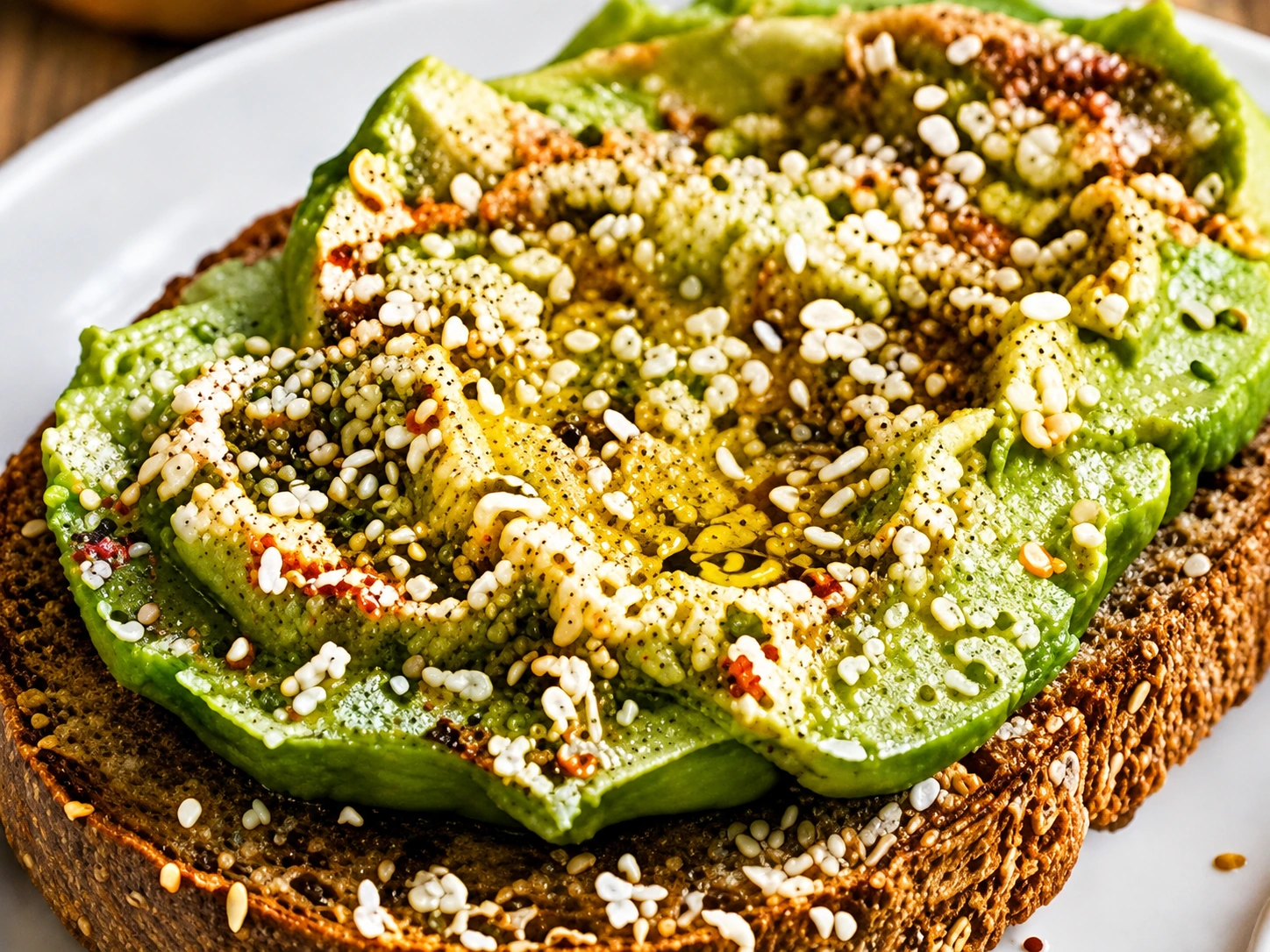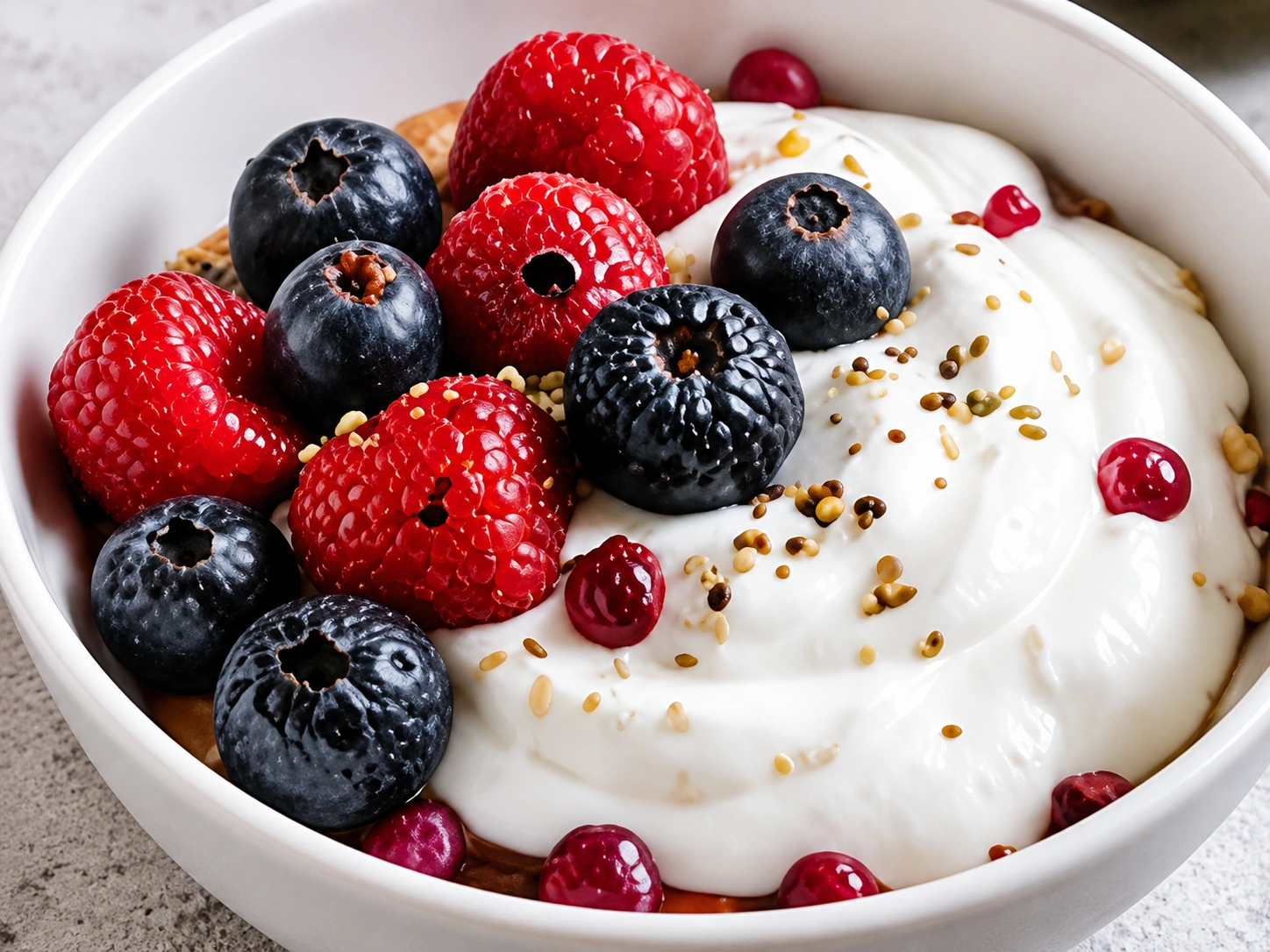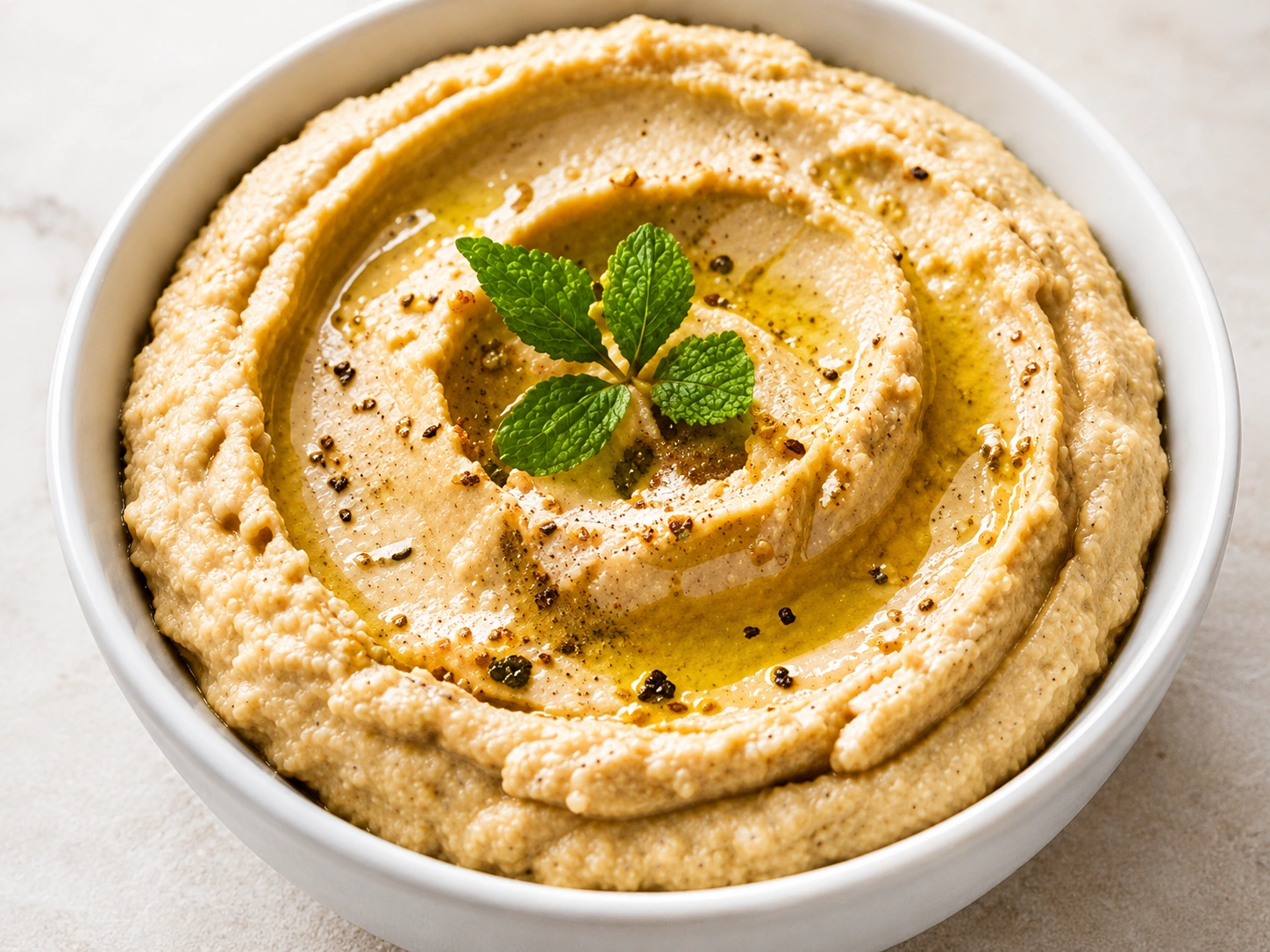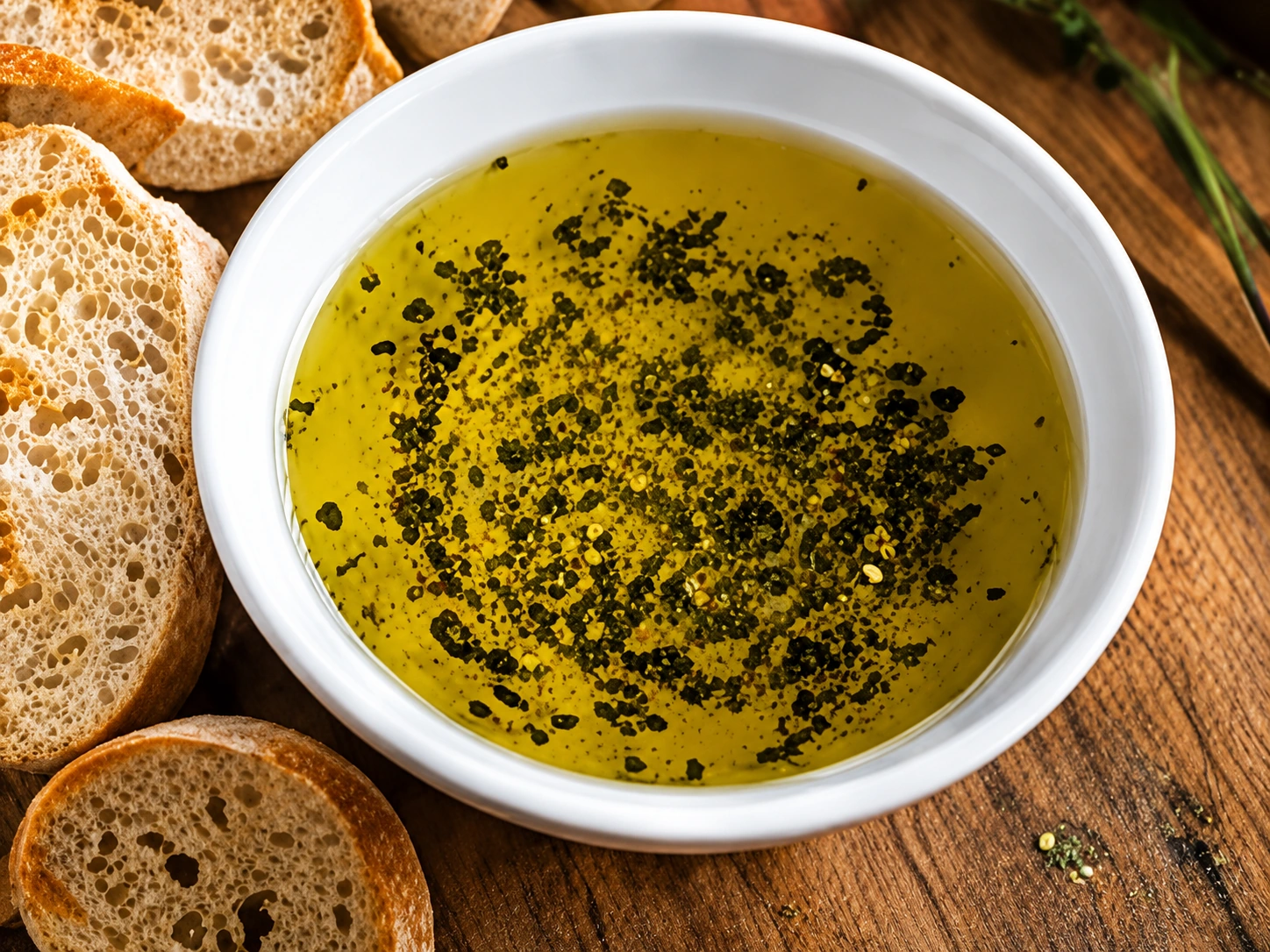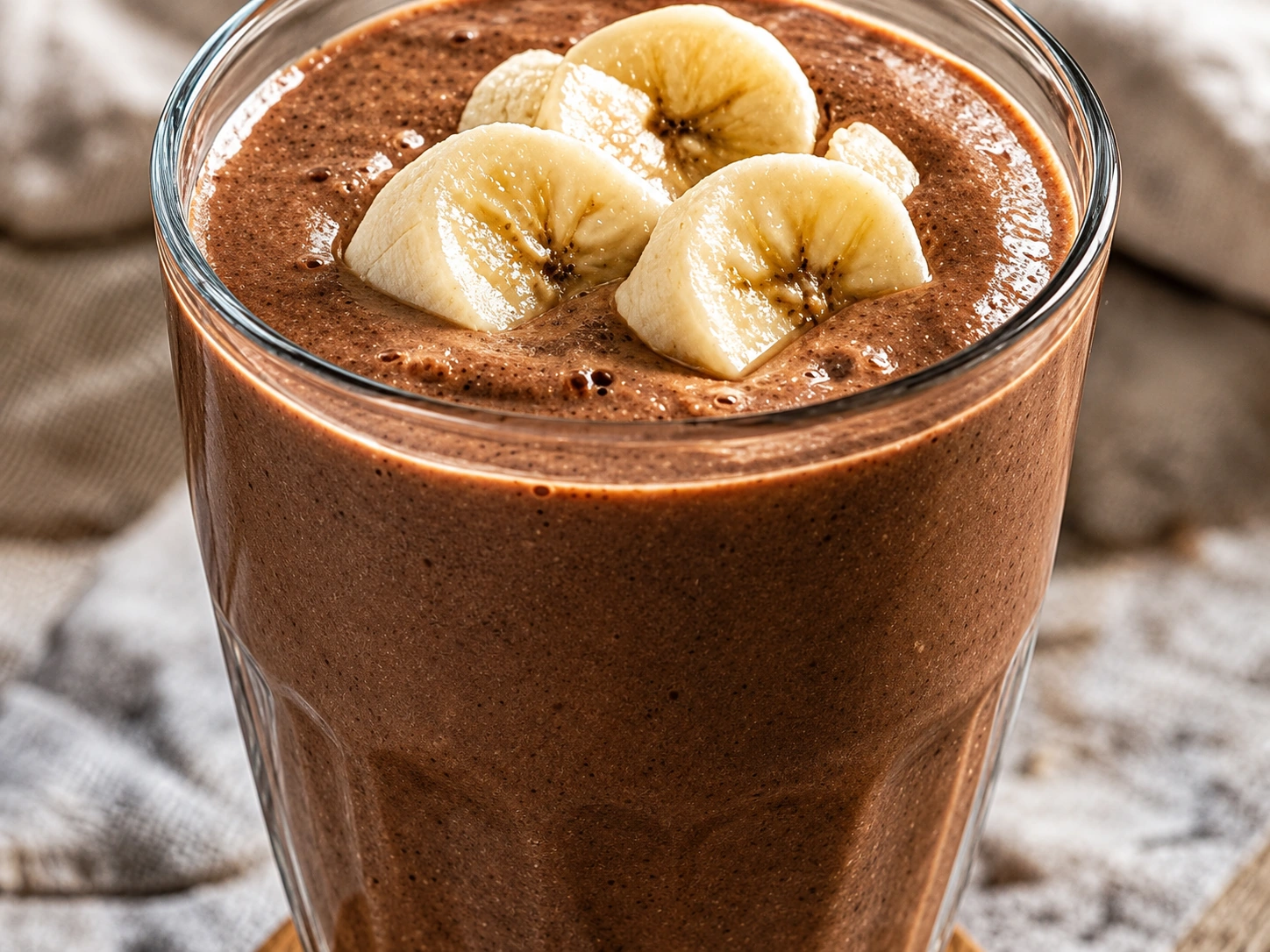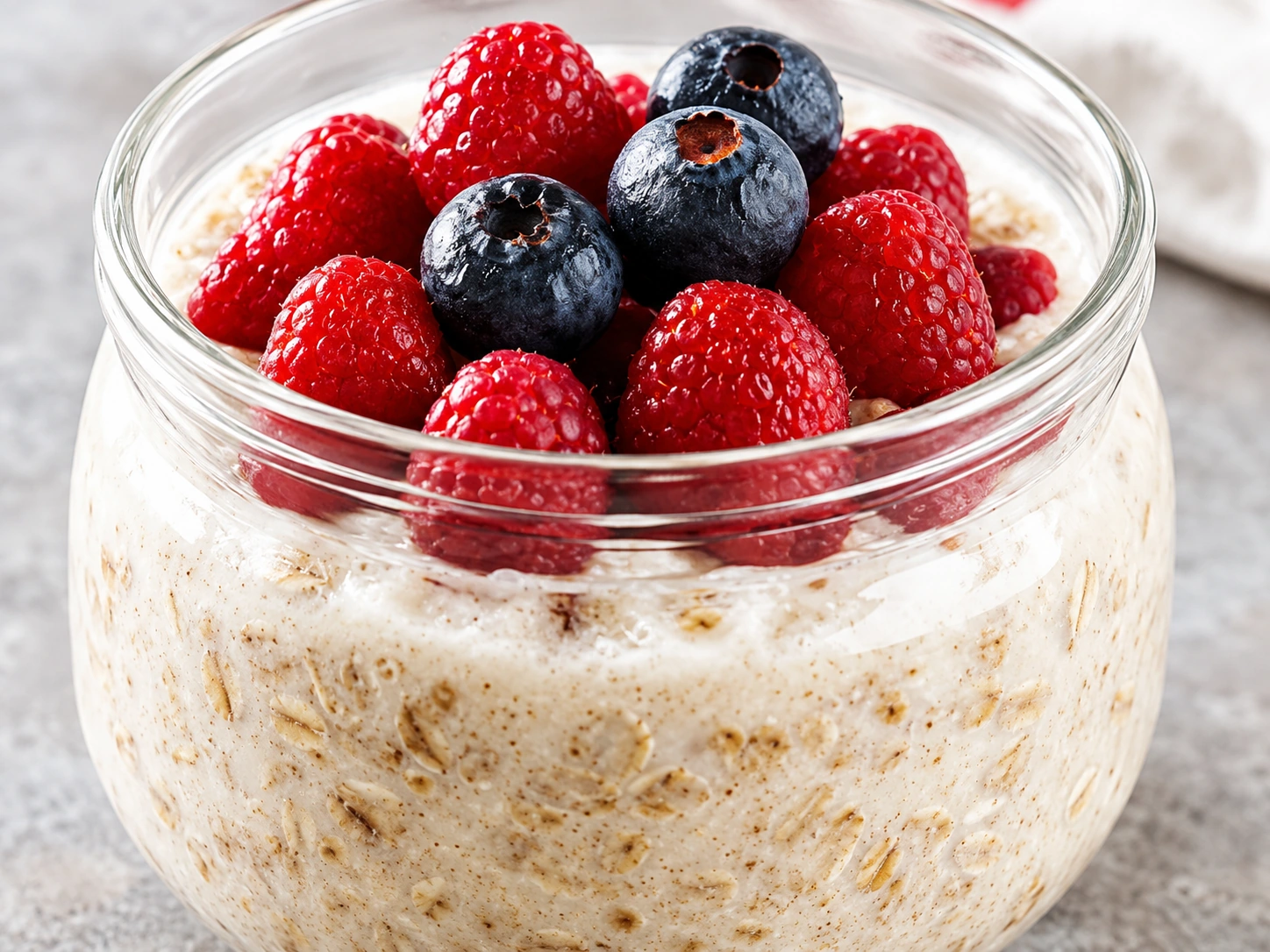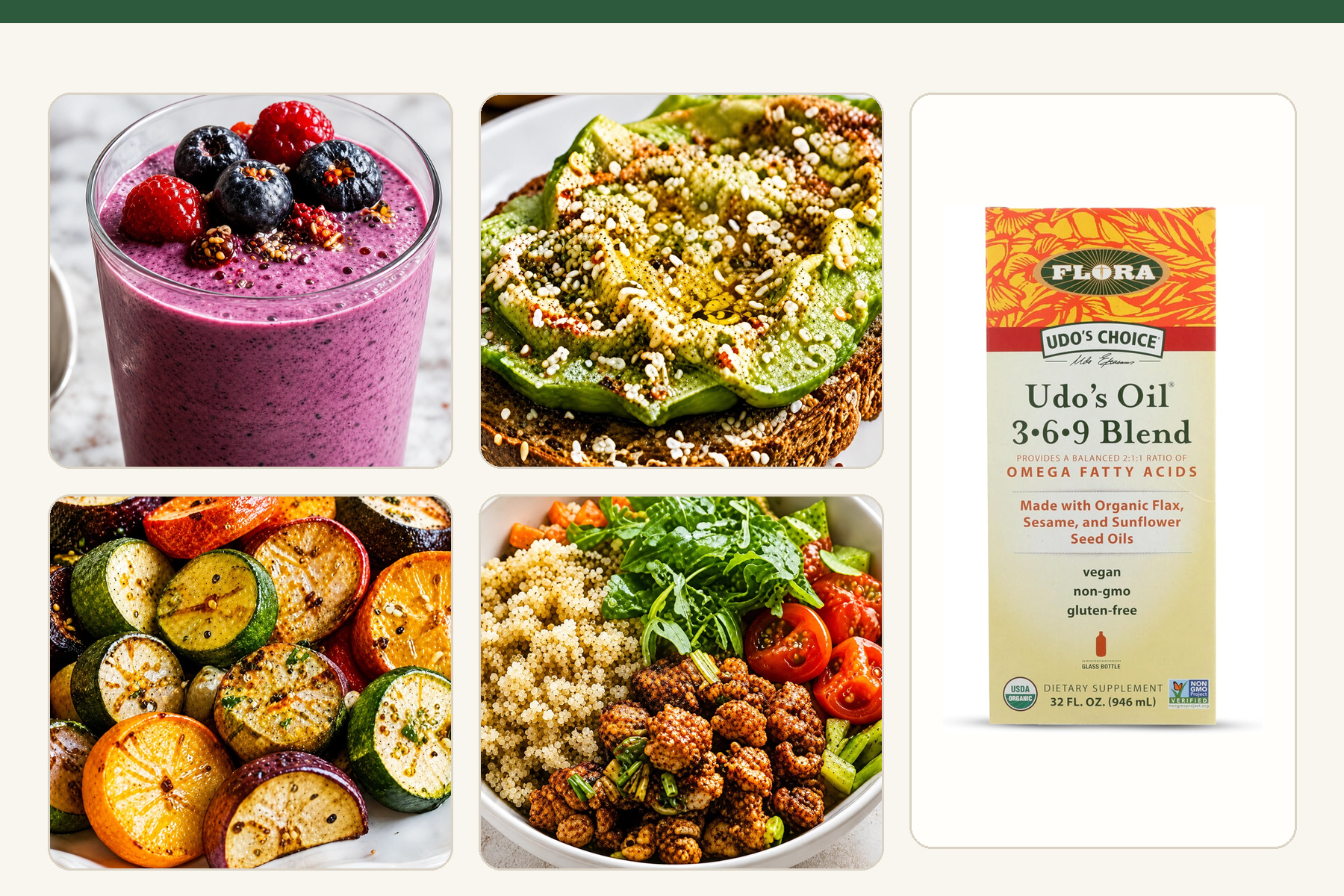
Oil is usually treated as something that belongs in the pan. Udo’s Oil is the opposite. Its place is at the very end: whisked into a dressing, blended into a cold smoothie, folded through hummus, or drizzled onto food after the heat has finished.
The standard Udo’s Oil 3•6•9 Blend is a plant-based mixture of flax, sunflower, sesame, coconut and evening-primrose seed oils, plus soy lecithin, rice-bran oil, oat-bran oil and mixed tocopherols. The Canadian nutrition panel lists 3.5 grams of omega-3 and 2 grams of omega-6 per 10 mL.
What essential fatty acids actually means
Omega-3: ALA
Alpha-linolenic acid is an essential plant omega-3. The body can convert some ALA to EPA and DHA, but that conversion is limited.
Omega-6: LA
Linoleic acid is also essential. It participates in membrane structure and fatty-acid signalling pathways; omega-6 is not automatically “bad.”
Omega-9
Omega-9 fatty acids can be made by the body, so they are not classified as essential. They still contribute to the blend’s overall fat profile.
Cell membranes
Omega-3 and omega-6 fatty acids become components of phospholipids—the structural fats surrounding cells.
Signalling molecules
These fatty acids can be used to form eicosanoids and other lipid mediators involved in cardiovascular, immune and endocrine signalling.
Practical, not miraculous
Udo’s Oil is a food and dietary fat. It does not diagnose, treat or cure back pain, inflammation or any medical condition.
The practical goal is not to turn one oil into a cure-all. It is to use a delicate, nutrient-dense fat correctly and consistently—cold, refrigerated and folded into food that you genuinely enjoy.