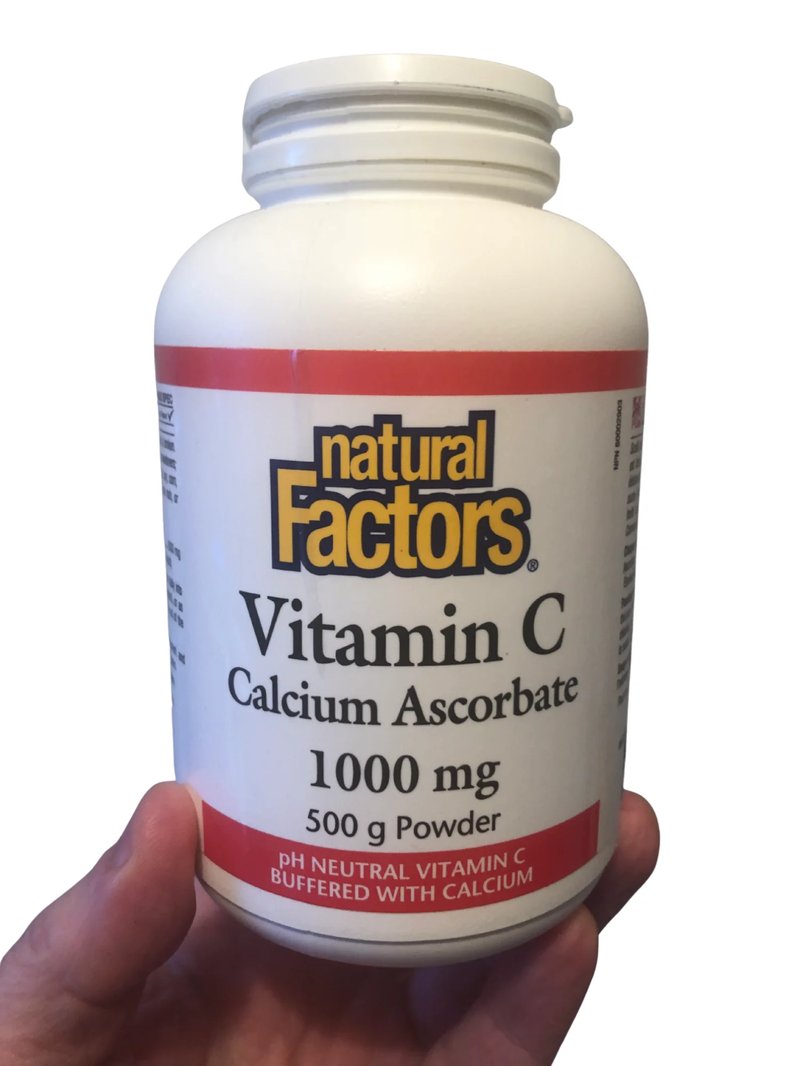
Plain ascorbic acid is acidic, and people who take it daily in meaningful amounts often
feel it in the stomach. Bonding vitamin C to calcium neutralizes that acidity, which is
the main reason calcium ascorbate exists as a supplement form: a pH-neutral way to take
vitamin C every day without digestive friction.
But the calcium itself is doing real work too, even at the modest amount in a single
dose. Calcium is the primary structural mineral in bone, but the small fraction not
stored in the skeleton circulates in blood and tissue, where it is needed for
muscle contraction, nerve signal transmission,
blood clotting, and regulating heart rhythm. None of
these functions tolerate a shortfall, which is part of why the body will pull calcium
out of bone to maintain blood levels if dietary intake runs low.
The amount in a typical calcium ascorbate dose is small relative to the daily calcium
requirement, so this is not a replacement for dietary calcium or a calcium supplement.
It is simply a quiet second benefit riding along with the vitamin C, rather than an
inert binder.
 Foundation
01
Foundation
01